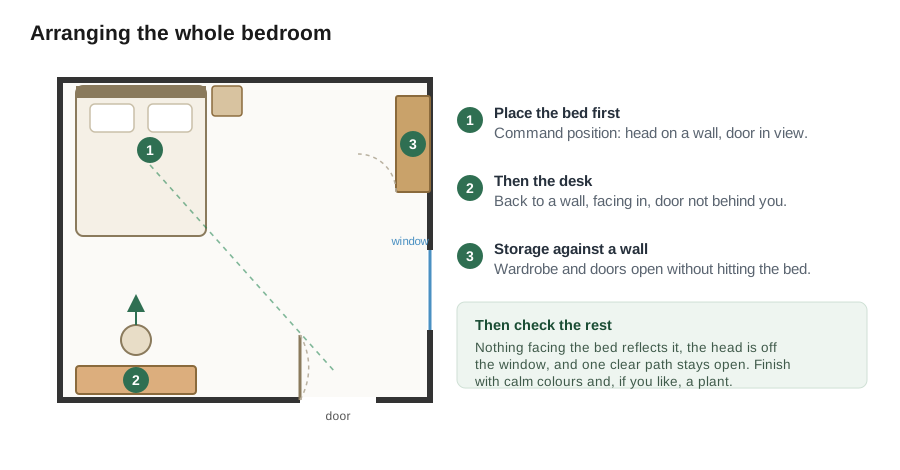
A feng shui bedroom layout is an order of decisions: place the bed first, then the desk and storage around it, then check reflections, windows, and the path.
Short answer: a feng shui bedroom layout starts with the bed in the command position — head on a solid wall, door in view, not in line with it. Then add the desk, place storage where its doors clear the bed, keep reflections off the bed, protect one clear path, and finish with calm colors.
Arrange a bedroom in order
Most bedroom questions get easier once you stop treating them as a pile of separate rules and start treating them as an order of decisions. A feng shui bedroom layout has a natural sequence: the piece with the most weight goes first and claims the best spot, and everything else is arranged around it. Follow that order and the trade-offs largely sort themselves out.
The rest of this guide walks that sequence. Each step links to a focused guide if you want the detail, but you can also just work down the list.
1. Start with the bed
The bed is the anchor of the room, and it has the strongest agreement in feng shui, so it gets the best wall first. Put it in the commanding position: head against a solid wall, the door visible from your pillow, and your body not in a straight line with the doorway. Our full guide to feng shui bed placement covers the priorities and the common problems.
Two of those problems come up so often they have their own guides. If the bed ends up in line with the door, see bed facing the door. If the only workable wall holds a window, see bed under a window. Settle the bed before you place anything else, because every other piece works around it.
2. Add the desk, if the room does double duty
If your bedroom also serves as a workspace, the desk comes next. Give it its own version of the command position: back to a solid wall, facing into the room, with the door in view rather than behind you, and daylight to the side. Our guide to a feng shui desk next to a window covers the window trade-offs. When the bed and desk compete for the same good wall, the bed keeps priority.
3. Place storage against the walls
Wardrobes, dressers, and shelving go against the walls, where they define the room without eating the middle of it. The one rule that matters here is clearance: a wardrobe or closet door must open fully without hitting the bed, and drawers must pull all the way out. Keep tall or heavy open storage away from directly above the head of the bed, both for the sense of pressure feng shui describes and for plain safety.
4. Check what faces the bed
Once the big pieces are placed, look at what the bed faces. A mirror reflecting the bed is the classic concern, and a TV in the bedroom behaves the same way when its dark screen reflects the sleeping area. Stand at the pillows and check each reflective surface; turn, move, or cover anything that shows the head of the bed.
5. Small rooms and studios
If the room is tight, the priorities stay the same but the trade-offs multiply. Lean harder on physical fit — a clear path, doors that open, furniture scaled to the space — and accept that you cannot satisfy every secondary preference. Our guide to a feng shui small bedroom layout walks through the compromises worth making when floor space runs out.
6. Finish with color and greenery
Color and plants are the finishing layer, not the foundation. A calm, low-contrast palette suits a room for rest; see feng shui bedroom colors for a restful scheme. A healthy plant or two can add life if you enjoy them — plants in the bedroom covers the mixed advice and the practical points. Neither changes a layout that has the bed and the path right; both make a good layout feel finished.
When the room fights you
No real bedroom satisfies every preference at once, and that is normal. When two goals collide, keep the order: the command position and a clear, usable room come before secondary preferences, and a supported compromise beats a perfect rule you cannot reach.
| If you must choose… | Keep | Let go |
|---|---|---|
| Command position vs. a symmetrical look | The command position | Perfect symmetry |
| A clear path vs. extra storage | The clear path | The extra cabinet |
| Head under a window vs. no solid wall at all | The best-supported wall you have | The idea of a flawless spot |
Name the trade-off out loud rather than pretending the layout is perfect. A remedy — a headboard, a cover over a mirror, a screen by the door — reduces a problem; it does not erase it.
A quick whole-room self-check
Stand in the doorway and run the list: Is the bed's head on a solid wall with the door in view? Can I walk to it without turning sideways? Do the room and closet doors open fully? Does anything facing the bed reflect it? Is the head clear of a window? Those five answers describe almost any bedroom layout, good or bad.
Sources and scope
This guide reflects cross-school practitioner consensus on Form-school bedroom arrangement, described in references such as Law of Feng Shui and Feng Shui Space Planner. It is based on where furniture sits relative to the door, walls, and windows — not compass directions or birth-date methods. We separate tradition, everyday comfort, and safety, and we make no sleep, health, wealth, or luck claims.
Lay out your real bedroom
The order is easiest to apply on your own floor plan. Draw your bedroom in the free planner with your walls, door, and window, place the bed in the command position, and arrange the rest around it — checking the path, the doors, and the reflections as you go.
Frequently Asked Questions
How do I lay out a bedroom with feng shui?
Work in order. Place the bed first, in the command position — head against a solid wall with the door in view but not in line with it. Then add a desk with its back to a wall, put storage where its doors clear the bed, check that nothing facing the bed reflects it, keep the head off a window, and protect one clear path. Finish with calm colors and, if you like, a plant.
What is the best feng shui bedroom layout?
There is no single layout that fits every room, but the best ones share the same priorities: the bed in the command position, a clear path to move around, doors and drawers that open fully, and no mirror or screen reflecting the bed. Get those right and the specific arrangement can follow the shape of your room.
What comes first when arranging a bedroom?
The bed. It is the anchor of the room and the piece with the strongest feng shui agreement, so it gets the best wall first: head against a solid wall, door visible from the pillow, not in a straight line with the doorway. Everything else — desk, storage, decor — is arranged around that decision.
What should you avoid in a feng shui bedroom layout?
Avoid the feet pointing straight out the door, the head under a window or on the door wall, a mirror or dark TV screen reflecting the bed, heavy objects directly overhead, and furniture so large it blocks the path or the doors. Most bedroom problems come down to one of these.
Does a feng shui bedroom layout use compass directions?
The layout on this page is based on where furniture sits relative to the door, walls, and windows, so it needs no compass. Direction- and birth-date-based methods are a separate, personal system we keep out of this geometry-based guidance, and we make no luck or fortune claims.