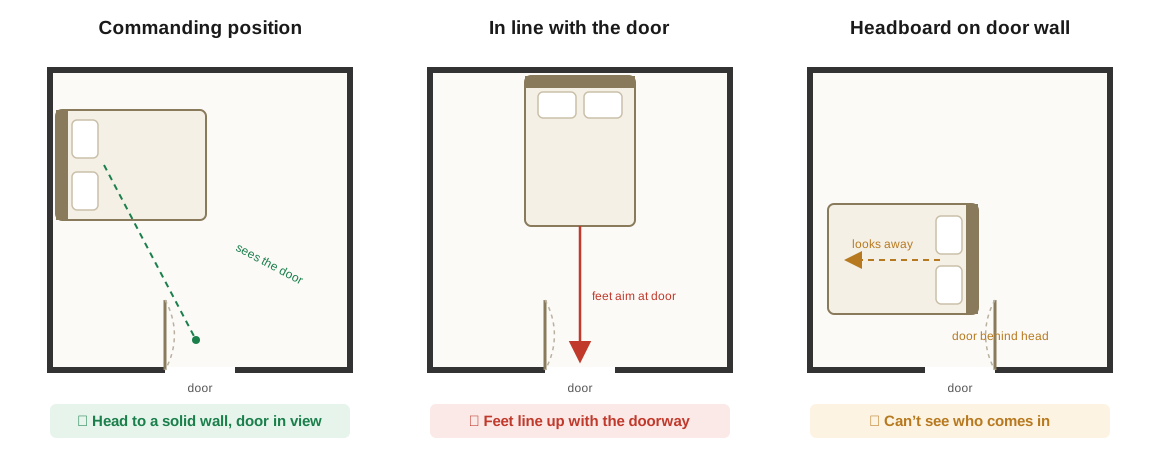
Same room, same door. Only the bed moves. The commanding position keeps the head on a solid wall with the door in view but not directly in line.
Short answer: the commanding position in feng shui is the placement where the head of your bed sits against a solid wall and you can see the door from your pillow without lying in a straight line with it. Aim for it first, then adjust for windows, closets, and walking space.
What the commanding position actually means
The commanding position is the most repeated idea in bedroom feng shui, and it is simpler than it sounds. It describes a bed placement with three plain features:
- The head of the bed is against a solid, unbroken wall that acts as support behind you.
- From the pillow you can see the bedroom door without turning around.
- Your body is not in a straight line with the doorway, so your feet do not point directly out through the open door.
Traditional feng shui values this because a person who can see the entrance feels settled rather than exposed. There is a practical-design reason too: noticing who enters a room, instead of being startled from behind, is a normal comfort most people recognize once they try it. It is a preference about how a room feels to use, not a safety rule and not a promise about sleep, health, or luck. It is also the first and most important of the broader feng shui bed placement rules.
How to find the commanding position for your bed
You can test any wall in about a minute. Stand or sit where the pillows would go and ask three questions:
- Is there a solid wall right behind the head? A full wall is ideal. A wall broken by a large window or a door is weaker support.
- Can I see the door from here? You should be able to notice someone walking in with a small turn of the eyes, not a full turn of the body.
- Am I lined up straight with the doorway? If your feet would point out through the open door, that wall fails even if it is otherwise solid.
A wall that passes all three is a commanding position. Most bedrooms have at least one, and the best one is usually across the room from the door, angled so the door is visible on the diagonal.
What breaks the commanding position
Three common layouts pull a bed out of the commanding position. The floor plans above show each one.
In line with the door. When the bed sits so the feet point straight out through the doorway, the room reads as an open channel from the door to the bed. Feng shui treats this as the placement to avoid first. Shifting the bed sideways, so the door is off to one corner of your view, usually fixes it without a full rearrangement.
Headboard on the same wall as the door. Here the bed may not face the door, but the sleeper cannot see who comes in because the entrance is behind the head. That misses the whole point of the commanding position. If another wall is available, move the head there.
No view of the door at all. A bed tucked behind a wardrobe or an alcove can lose sight of the entrance completely. The commanding position needs a line of sight to the door, so clearing or shifting whatever blocks it matters more than any single decorative fix.
A related problem is a door that swings open onto the side of the bed. It does not change where the head goes, but it does crowd the person sleeping on that side, so factor it in once the headboard wall is chosen.
When the commanding position is not possible
Real rooms fight back. A small bedroom, a rental you cannot alter, or a layout where the only solid wall holds a window can all make a perfect commanding position impossible. That is normal, and it does not mean the room is unusable. It means you get as close as you can and support the gap honestly.
| Constraint | Get closer by | What it does not fix |
|---|---|---|
| Only wall free is beside the door | Keep the head there but angle the bed so the door is at least partly in view | You still see less of the entrance than an ideal wall |
| Head must go under a window | Add a tall, solid headboard as the missing backing | The window still affects light, draft, and noise |
| Bed faces away from the door | Place a mirror so it reflects the doorway, not the head of the bed | A reflection is a partial view, not a real line of sight |
Treat these as improvements, not cures. A headboard, a small turn, or a mirror reduces the interference; it does not delete the underlying constraint, and no honest layout pretends otherwise. When two goals collide, pick the one that matters most for how you actually live in the room, and accept the trade-off out loud.
Does the commanding position apply to a desk?
Yes. The same logic covers a desk, a reading chair, or a stove in the kitchen: back to a solid wall, facing into the room, door in view rather than behind you. In a bedroom that also serves as a home office, give the commanding position to the bed first, then seat the desk so you are not working with your back to the door. When both cannot win, the bed keeps priority because that is where you are least aware of your surroundings.
Common mistakes to avoid
- Forcing the exact diagonal corner. The diagonal is the textbook picture, not the rule. A solid wall, a visible door, and no straight-line alignment are what count.
- Blocking a closet or a walkway to chase the position. A commanding position that traps a wardrobe door or forces you to squeeze past the bed is not a good trade.
- Using a mirror that then reflects the bed. A mirror can restore a view of the door, but if it reflects the head of the bed you have swapped one common concern for another. Aim it at the doorway only.
- Reading it as a safety or health claim. The commanding position is a widely shared traditional preference with a sensible comfort reason. It is not a medical fix and not a way to change your fortune.
Sources and scope
This guide reflects cross-school practitioner consensus that treats the commanding position as a core, well-supported bedroom preference, described in references such as Tom's Guide and Law of Feng Shui. It is a Form-school idea based on where furniture sits, not a compass or birth-date calculation, so it does not depend on your personal direction or the year. We separate what is tradition, what is everyday comfort, and what is safety, and we do not promise better sleep, wealth, or relationships from a bed placement.
Check the commanding position in your own room
Reading about it is one thing; seeing it in your real floor plan is faster. Draw your bedroom in the free planner with your actual door and walls, and it will show whether the bed sits in the commanding position and how each wall compares before you move a single piece of furniture.
Frequently Asked Questions
What is the commanding position in feng shui?
The commanding position is the spot for your bed where the head is against a solid wall and you can see the bedroom door from your pillow without lying directly in line with it. It is the single most repeated idea in bedroom feng shui because it lets you rest while still noticing who enters the room.
Does my bed have to be diagonally opposite the door?
No. Diagonally opposite the door is the textbook ideal, but the commanding position only asks for three things: a solid wall behind the head, a clear view of the door, and no direct foot-to-door alignment. Many rooms reach a good commanding position without the exact diagonal corner.
What if I cannot put my bed in the commanding position?
Get as close as you can, then support the gap. A tall solid headboard replaces a missing wall, and a mirror placed to reflect the doorway can restore a view of the entrance as long as it does not reflect the head of the bed. These are improvements, not a guarantee that every preference is met.
Is the commanding position just another way of saying do not face the door?
Not facing the door is only one part of it. The commanding position also wants the head of the bed on a solid wall and the door within view. A bed can avoid facing the door yet still miss the commanding position if the headboard sits on the door wall where you cannot see who comes in.
Does the commanding position apply to a desk too?
Yes. The same idea applies to a desk or any seat where you spend time: back to a solid wall, facing into the room, with the door in view rather than behind you. In a bedroom that doubles as an office, the bed takes priority for the commanding position and the desk follows.