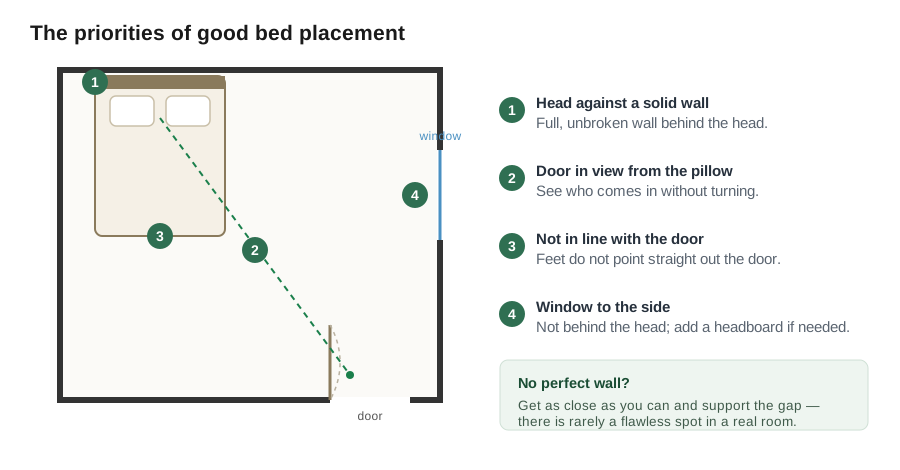
Good feng shui bed placement is a short list of priorities, not a single magic spot. Start with the head on a solid wall and the door in view, then work through the rest.
Short answer: good feng shui bed placement puts the head of the bed against a solid wall, with the door in view but not in a straight line with it, and keeps the bed clear of windows behind the head, mirrors, TV screens, and heavy overhead objects. Get the first rule right, then handle the others as trade-offs.
The one idea behind every rule: the commanding position
Almost every feng shui bed placement rule is a version of a single idea called the commanding position: your head is supported by a solid wall, and you can see the door from your pillow without being directly in line with it. If you understand that one concept, the rest of the list falls into place. Bed placement is the first and most important step of a full feng shui bedroom layout; this guide zooms in on the bed itself. It is worth reading the full explanation in our guide to the commanding position in feng shui before working through the specifics below.
Feng shui treats this as the priority because a bed is where you are least aware of your surroundings, so a supported, aware position matters most there. It is a preference about how a room feels to rest in, plus a sensible comfort reason — not a promise about sleep, health, or luck.
The bed placement checklist
Work through these in order. The first two carry the most weight; the rest are refinements you balance against the shape of your real room.
1. Head against a solid wall
Put the head of the bed against a full, unbroken wall. That wall is the "support" behind you, and it is the most repeated single instruction in bedroom feng shui. A wall broken by a large window or a door is weaker backing; if it is all you have, a tall, solid headboard stands in for the missing wall.
2. See the door, but not in line with it
From the pillow you should be able to notice someone entering with a glance, without your feet pointing straight out through the doorway. Lining up directly with the door is the placement to avoid first — see bed facing the door for how to fix it. Shifting the bed sideways so the door sits off to one corner of your view usually solves it.
3. Not with the headboard on the door wall
If the head of the bed is on the same wall as the door, you cannot see who comes in, which defeats the commanding position even when the bed does not face the door. Move the head to another wall when one is available.
4. Not directly under a window
A window behind the head removes solid support and adds light, draft, and noise at the most sensitive spot. If the only workable wall holds a window, keep the bed there but add a tall, solid headboard and manage the glass with a blind or heavy curtain. Treat it as a supported compromise, not a perfect wall.
5. Not reflected by a mirror or a TV screen
A mirror facing the bed is the classic reflection concern, and a dark TV screen in the bedroom behaves the same way when it is switched off. Check what each reflects from the pillow, and turn, move, or cover anything that shows the head of the bed.
6. Clear of beams and heavy overhead objects
A heavy beam, a large light fixture, or open shelving directly over the bed presses on the space visually and can be a real safety issue if poorly fixed. Where possible, shift the bed out from under it, and make sure anything mounted above a bed is securely attached.
A related detail once the wall is chosen: if a door swings open onto one side of the bed, it crowds the person sleeping there, so factor that into which side goes against the wall.
What to do when no wall is perfect
Most real bedrooms cannot satisfy every rule at once. That is normal and does not mean the room fails. The method is always the same: get the commanding position as close as you can first, then take the least-bad trade-off on the remaining points and support it honestly.
| If you must… | Do this | Say plainly |
|---|---|---|
| Put the head under a window | Add a tall, solid headboard; use a blind | The window still affects light and draft |
| Keep a mirror or TV facing the bed | Cover it at night or use a cabinet with doors | The reflection is reduced, not removed |
| Use the wall beside the door | Angle the bed so the door is partly in view | You see less of the entrance than ideal |
A remedy reduces the interference; it does not delete the underlying condition, and no honest layout pretends otherwise. When two goals collide, pick the one that matters most for how you actually live in the room.
A quick self-check
Lie down where the pillows go and ask four things: Is there a solid wall behind my head? Can I see the door? Are my feet pointing straight out of it? Does any mirror or screen show the bed? Those four answers tell you almost everything about your bed placement, and they map directly to the numbered plan above.
Common mistakes to avoid
- Chasing the exact diagonal corner. The diagonal is the textbook picture; a solid wall, a visible door, and no straight-line alignment are what actually count.
- Fixing a minor point while ignoring the commanding position. Sort support and door view first, then the reflections and windows.
- Blocking a closet, walkway, or radiator to force a position. A placement that traps a door or a vent is not a good trade.
- Reading bed placement as a luck or health formula. A well-placed bed supports comfort and a sense of calm. It is not a treatment or a promise about fortune.
Sources and scope
This guide reflects cross-school practitioner consensus on Form-school bed placement, described in references such as Tom's Guide and Law of Feng Shui. These rules are based on where the bed sits relative to the door, walls, and windows — not a compass or birth-date method. We separate tradition, everyday comfort, and safety, and we do not promise better sleep, wealth, or relationships from a bed placement.
Try your real room
Reading the rules is faster to apply when you can see them on your own floor plan. Draw your bedroom in the free planner with your actual walls, door, and window, and it will check the bed against these placement priorities and show how each wall compares before you move anything.
Frequently Asked Questions
What is the best feng shui bed placement?
The best feng shui bed placement puts the head of the bed against a solid, unbroken wall where you can see the bedroom door from your pillow without lying in a straight line with it. This is called the commanding position, and it is the single most agreed-on rule for placing a bed.
Which wall should the bed go against in feng shui?
Choose a full wall with no window or door in it, positioned so the door is visible on the diagonal rather than straight ahead. If the only solid wall holds a window, you can still use it by adding a tall, solid headboard for support and managing the light.
What bed positions does feng shui say to avoid?
Avoid the feet pointing straight out through the door, the headboard on the same wall as the door where you cannot see who enters, the head directly under a window, and the bed reflected by a mirror or a dark TV screen. Overhead beams or heavy objects above the bed are also worth clearing.
What if no bed position follows all the feng shui rules?
That is common in real rooms. Prioritize the commanding position first, then accept the least-bad trade-off for the remaining constraints and support it — for example a headboard under a window or a cover over a mirror. There is rarely a flawless spot, so compare options instead of chasing perfection.
Does feng shui bed placement use compass directions?
The rules on this page are Form-school ideas based on where the bed sits relative to the door, walls, and windows, so they do not need a compass. Direction- and birth-date-based methods are a separate system, and we keep them out of this geometry-based guidance.