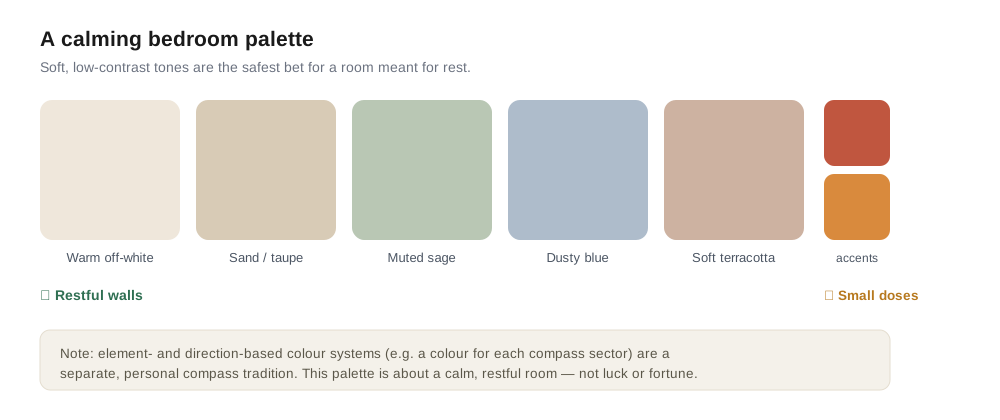
Soft, low-contrast tones are the safest bet for feng shui bedroom colors. Element- and direction-based color systems are a separate, personal tradition.
Short answer: for feng shui bedroom colors, choose soft, muted, low-contrast tones — warm off-whites, sand, muted sage, dusty blue, soft terracotta — because a bedroom is a room for rest. Save bright, stimulating colors for small accents, and treat lucky-color charts as an optional personal system, not a rule.
The reliable advice: calm, low-contrast walls
Most feng shui bedroom color guidance, once you strip away the fortune promises, agrees on one practical idea: a bedroom is meant for rest, so its main colors should feel calm rather than energizing. That points to soft, muted, low-contrast tones on the walls — the kind of palette shown above. Warm off-whites, sand and taupe, muted sage, dusty blue, and soft terracotta all read as restful and work in almost any room.
This is a comfort and mood choice, not a magic formula. A calm palette makes a bedroom feel like somewhere to wind down; it does not change your luck, health, or relationships, and no honest color guide should say otherwise.
Why there is no single "lucky" bedroom color
Search for feng shui bedroom colors and you will find charts assigning a specific shade to each compass direction or one of the five elements. Those systems are real, but they belong to the same personal, compass-based tradition as bed direction: the recommended color depends on a compass reading of the room and, in some versions, personal details. Because the answer changes from room to room and person to person, a general page cannot honestly hand every reader one lucky color.
So we keep the color advice on this page to the part that applies to any bedroom — choose a restful, low-contrast palette — and we leave the element-and-direction color systems as an optional layer you can explore if you enjoy them. We make no claim that a particular color brings fortune.
Building a restful palette
A simple way to put it together:
- Start with a soft base. A warm off-white, sand, or pale greige on the main walls keeps the room light and low-contrast.
- Add one muted color for depth. Muted sage, dusty blue, or soft terracotta on a feature wall, bedding, or curtains adds character without shouting.
- Keep accents small. If you love a bold red or a vivid orange, bring it in through cushions, art, or a throw rather than the walls.
- Mind the contrast, not just the hue. A calm room usually comes from low contrast between the elements, so tones that sit close together tend to feel more restful than sharp light-dark pairings.
| Goal | Try | Keep in mind |
|---|---|---|
| Calm, restful room | Warm off-white, sand, muted sage, dusty blue | Low contrast reads as calmer |
| A little warmth | Soft terracotta, muted clay | Muted, not saturated |
| A pop of energy | Red or orange accents | Accents only, not full walls |
Colors and the rest of the room
Color sets the mood, but it does not do the heavy lifting in a bedroom. Where the bed sits — head on a solid wall, door in view, clear of windows and reflections — affects how the room feels far more, and it is the part of feng shui with the widest agreement. Choose your palette after you have the layout right; see our guide to feng shui bed placement for that side.
Common mistakes to avoid
- Chasing a lucky color chart as if it were universal. Those charts are personal and compass-based; a single shade for everyone is not really that system.
- Painting whole walls in a stimulating color. Bold reds and oranges energize a space; keep them as accents in a room meant for rest.
- Fixing the color before the layout. A calm palette will not offset a bed with no support or a mirror facing it. Sort placement first.
- Expecting a color to change your fortune. A restful palette helps a room feel calm. It is not a luck, health, or wealth remedy.
Sources and scope
This guide reflects common feng shui practice that a bedroom's main colors should support rest, alongside general interior-design consensus on calm, low-contrast palettes. Element- and direction-based color systems are a separate compass tradition we do not compute. We separate tradition, everyday comfort, and safety, and we make no luck, wealth, or health claims about bedroom colors.
Get the layout right first
Color is the finishing touch; placement is the foundation. Draw your bedroom in the free planner to set the bed and check the layout, then choose a restful palette to match a room that already feels calm.
Frequently Asked Questions
What are the best feng shui bedroom colors?
For a room meant for rest, soft and muted tones are the safest choice: warm off-whites, sand and taupe, muted sage, dusty blue, and soft terracotta. These low-contrast colors help a bedroom feel calm. Brighter, more stimulating colors are better used as small accents than as the main wall color.
Is there one lucky color for a feng shui bedroom?
No. Color systems that assign a shade to each compass sector or element are a separate, personal, compass-based tradition, and they change from room to room and person to person. A general page cannot honestly give you one lucky color, and we do not make luck or fortune claims. Choosing a restful, low-contrast palette is the reliable advice for any bedroom.
Are bright reds bad feng shui for a bedroom?
Not bad, but stimulating. Strong reds and vivid oranges bring a lot of energy, which works against a room designed for rest if they cover the walls. If you love them, use them as accents — a cushion, a piece of art, a throw — rather than the dominant wall color.
Do bedroom colors matter more than bed placement?
No. Color affects how calm a room feels, but where the bed sits — head on a solid wall, door in view, clear of windows and reflections — has a bigger effect on the room and is the part with the widest feng shui agreement. Sort the placement first, then choose a palette you find restful.
What colors should I avoid in a bedroom?
There is no forbidden color, but very high-contrast or highly saturated schemes tend to feel energizing rather than restful. If calm is the goal, keep the walls soft and low-contrast and save the boldest colors for small accents. It is a comfort choice, not a rule about fortune.