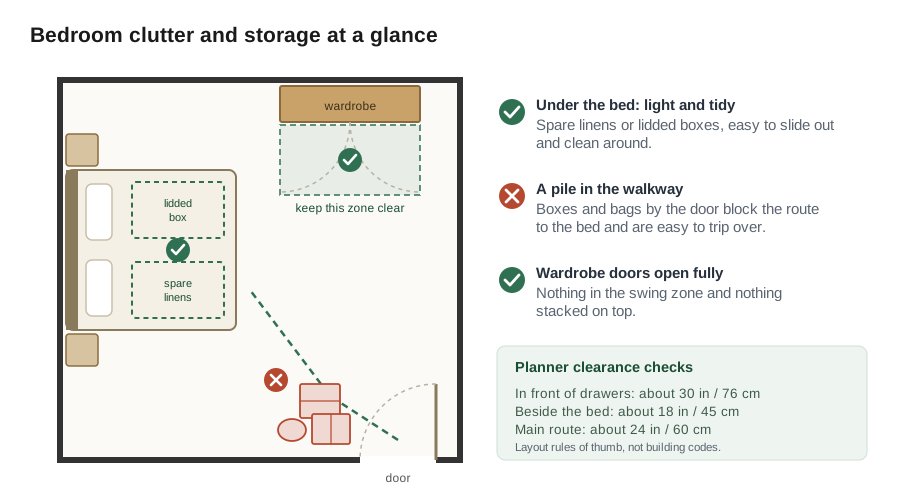
One room, three storage choices. The boxes under the bed and the clear wardrobe zone work. The pile by the door is the one to move.
Short answer: feng shui prefers a bedroom with little clutter and an open space under the bed. If you need that space, store soft things like spare linens in lidded boxes or bed drawers, keep it tidy, and keep heavy, sentimental and work items elsewhere. Keep walkways, closet doors and nightstands clear first.
Why feng shui cares about bedroom clutter
Feng shui tradition describes clutter as stagnant energy. The idea is that a room's energy, called qi, should move gently through the space, and piles of things slow it down. The bedroom gets extra attention because it is the room meant for rest, so tradition asks for it to be the calmest room in the home.
You don't have to take the energy idea literally to find the advice useful. A room with less stuff on the floor is faster to vacuum and collects less dust. You can find your keys. You are less likely to trip over a bag on the way to the bathroom at 3 a.m. And a room with clear surfaces simply looks quieter. The American Lung Association's advice on dust mites includes cutting down on clutter where mites can hide, which is a sensible housekeeping point whatever you think of qi.
Clutter also tends to undo a good layout. You can set the bed in a strong position, as our feng shui bedroom layout guide describes, and then lose the clear path to it under laundry and boxes. So this guide starts with storage, because that is where most bedroom clutter ends up.
Storage under the bed: what tradition prefers
Most feng shui sources say the same thing. The ideal is an empty space under the bed, open enough for air to move and for you to clean. For that reason you'll often see beds on legs suggested over platforms that sit flat on the floor.
That ideal often runs into real life. Plenty of bedrooms have no closet worth the name, and the space under a queen bed is a lot of floor to leave empty. Practitioners differ here, and many accept neat, closed storage as long as it doesn't become a dumping ground. Our feng shui bedroom rules checklist takes the same middle position.
There is no need to worry if your bed already has things under it. The point is to make the space orderly and easy to live with.
What sources commonly suggest keeping out from under the bed:
- Work papers, bills and laptops, which bring work into the room
- Old letters, photos and keepsakes you have strong feelings about
- Books and exercise equipment, which some practitioners see as stimulating
- Broken items, sharp tools and anything you've been meaning to fix or throw out
- Heavy boxes you'll strain to drag out
A practical compromise for small rooms
If you do use the space, the common compromise looks like this. Store soft things related to sleep, such as spare sheets, blankets, pillows and out-of-season duvets. Put them in lidded boxes or zippered storage bags so nothing spills out and less dust settles on them. Leave a little space around the boxes so you can vacuum. Then check it twice a year and take out anything that drifted in.
Keep it light, too. You should be able to pull each box out with one hand. That makes cleaning easy and keeps you from wrestling heavy containers in a tight gap.
Drawers under the bed
A storage bed with built-in drawers fits the same compromise. The drawers close, the contents stay put, and it often looks tidier than loose bins. The catch is space. Drawers need room to open, and a bed pushed tight against a dresser or wall can leave them half usable.
Our planner checks for about 30 in (76 cm) in front of drawers. That is our own layout rule of thumb, not a building code. If you're not sure your room has that much floor beside the bed, the bedroom size guide shows how bed sizes and clearances add up in common room sizes.
Closets and wardrobes
A closet that won't close is the most visible kind of clutter. The first goal is simple: every closet and wardrobe door should open and close fully. If a door catches on a pile, a laundry basket or the corner of the bed, move the obstacle or move the furniture.
Next, look at the top of the wardrobe. Boxes and suitcases stacked up there are a common habit. Feng shui tradition dislikes heavy things looming over the room, and the safety reason is plainer: anything stacked high can fall, especially near the bed. Keep heavy items low and store light ones up top, or nothing at all. Freestanding wardrobes should be anchored to the wall.
Mirrored wardrobe doors raise a separate question, since tradition prefers that mirrors not reflect the bed. Our guide to bedroom mirror feng shui covers how to check and what to do if they do.
Nightstands and other surfaces
Nightstands collect things fast: water glasses, chargers, receipts, three books you're halfway through. Tradition likes a matched pair of nightstands with a few chosen items on each, and most people find that easier to live with anyway.
A workable rule is a lamp, one book and whatever you truly use at night. Give chargers a cable clip or a drawer. Put a small tray on top for small items so they gather in one place.
The same goes for a dresser top and any chair that has quietly become a clothes rack. If you work in the bedroom, the desk is often the biggest source of paper. Our guide to feng shui desk placement covers where it sits best, and putting work away at the end of the day helps keep it from spreading.
The feng shui clutter map
You may see the phrase "feng shui clutter map." It usually means laying the bagua, a traditional nine-area grid, over the floor plan and noticing which areas hold piles. Each area has a traditional name, such as Wealth, Relationships or Knowledge. We explain both common ways to draw the grid in our bedroom bagua map guide.
As a cultural practice, this gives you a way to decide where to start. Clear the center of the room first so the floor feels open, then pick an area whose name means something to you. It is a decorating framework. Tidying the Wealth corner will not change your finances, and we don't suggest otherwise.
A 20-minute bedroom declutter routine
You don't need a free weekend. Set a timer and work through these steps once, then repeat them weekly in a shorter form.
- Minutes 0 to 5: clear the floor and walkway. Pick up everything on the floor between the door and the bed. Clothes go to the hamper or the closet, and anything that belongs in another room goes in a basket by the door.
- Minutes 5 to 10: reset the nightstands. Take everything off. Put back only the lamp, one book and what you use at night. Carry dishes out.
- Minutes 10 to 15: check under the bed. Pull out what's there. Keep soft items in lidded boxes, and set aside anything heavy, sentimental or work related to store elsewhere.
- Minutes 15 to 20: close the closet. Push back anything that stops the doors from closing. Take down anything heavy from the top of the wardrobe.
Then empty the basket by the door into the rooms where those things belong. That basket is the step people skip, and it's the one that keeps the bedroom from refilling.
When the clutter is really a space problem
Sometimes the room isn't messy so much as too full. If a dresser blocks a drawer, the closet door hits the bed and there's no place to put a laundry basket, more tidying won't fix it. The furniture is too big for the floor.
In that case, change the furniture before you buy more storage. A bed with drawers can replace a dresser. Wall shelves can take the place of a nightstand. A narrower wardrobe can free up a walkway. Our guide to feng shui for a small bedroom goes through these trade-offs, and the planner can show whether a new piece will fit before you buy it.
Sources and scope
This guide follows common feng shui advice on bedroom clutter and under-bed storage, as described in Livingetc's article on what not to store under the bed and practitioner references such as Law of Feng Shui. Background on qi and feng shui as a tradition comes from Wikipedia's overview of feng shui. The housekeeping point about clutter and dust follows the American Lung Association's dust mite guidance. The clearance figures are our planner's layout checks, not building or accessibility codes. We keep tradition, everyday comfort and safety separate, and we make no claims about luck, love, money, health or sleep.
See where your storage fits
Storage is easier to plan on a drawing than by dragging furniture around. Draw your bedroom in the free planner with your real walls, door and closet, then add the bed and dresser. It checks for about 30 in (76 cm) in front of drawers, about 18 in (45 cm) beside the bed and about 24 in (60 cm) for the main route, so you can see where storage fits and where it would block the way. These are rules of thumb for a comfortable layout, not codes.
Frequently Asked Questions
Is storage under the bed bad feng shui?
Traditional feng shui prefers an open space under the bed, so air can move and the area stays easy to clean. It is not treated as a disaster. Many practitioners accept tidy, closed storage of soft things like spare linens, especially in small rooms. Avoid a jumble of loose items, and keep heavy, sentimental or work things somewhere else.
What can I store under my bed in feng shui?
The usual compromise is soft, sleep-related items: spare sheets, blankets, pillows and out-of-season bedding, kept in lidded boxes or drawers. Items commonly kept elsewhere are work papers, old letters and keepsakes, books, exercise gear, and anything broken or sharp. Whatever you store, you should be able to slide it out and vacuum underneath.
Are drawers under the bed OK in feng shui?
A storage bed with built-in drawers is a common, tidy option and fits the same compromise as lidded boxes. Keep the drawers organized with soft items, close them fully, and leave room to open them. Our planner uses about 30 in (76 cm) in front of drawers as a layout rule of thumb, not a building code.
What is a feng shui clutter map?
People use the phrase for laying the bagua map, a nine-area grid, over a room and noticing which areas hold piles of stuff. Each area has a traditional name such as Wealth or Relationships. Treat it as a way to decide where to tidy first, not as a way to bring about any result in your life.
Why does feng shui say to declutter the bedroom?
In tradition, clutter is described as stagnant energy, and the bedroom is meant to be the calmest room in the home. There are plain practical reasons too: a clear room is easier to clean, collects less dust, has fewer things to trip over at night, and makes it easier to find what you need. We make no claims about luck, health or sleep.