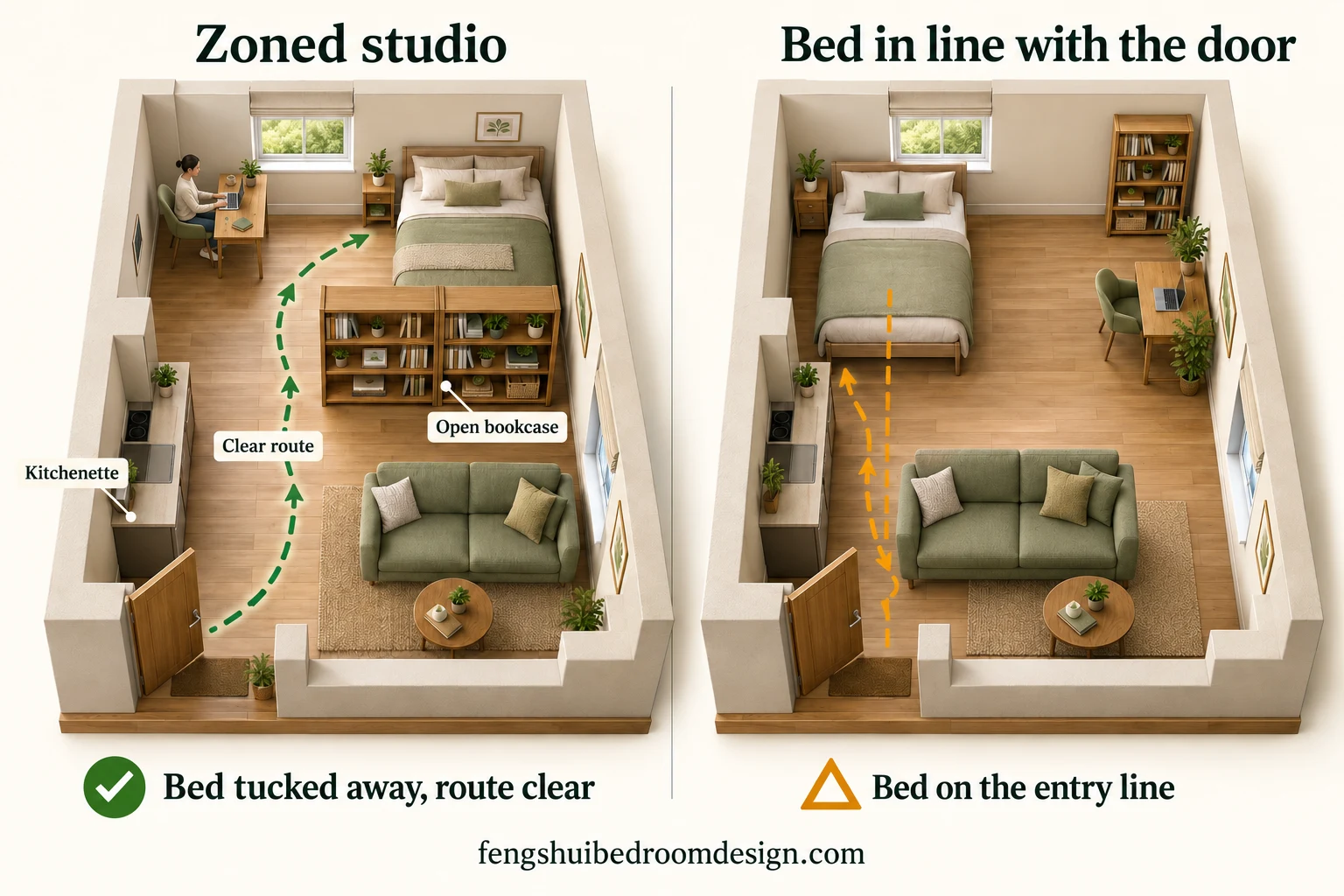
One studio, one entry door, the same windows and kitchenette. Only the furniture moves. On the left the bed is tucked away and the route is clear.
Short answer: in a feng shui apartment, and especially a studio, put the bed as far from the entry door as you can, out of line with it and ideally out of sight from it, with the headboard on a solid wall. Then split the room into sleeping, living and entry zones with freestanding furniture, and keep a clear route from the door. None of that needs a drill.
What feng shui means in a rented apartment
Feng shui is a Chinese tradition about how buildings and rooms are arranged. It is a cultural practice, not a science, and we treat it that way. Much feng shui writing assumes you can move a door or repaint. In a rental you usually get the walls, door and windows the landlord gave you.
What you can change is where the furniture goes, and that covers most of what feng shui says about a home: where you sleep, what you see when you walk in, and whether you can cross the room without squeezing past things. Everything below works in a studio or a small one-bedroom, and all of it can be undone when the lease ends.
Zone a studio into sleeping, living and entry areas
A studio puts your whole life in one room, so feng shui advice for studios starts by splitting it into zones, even without walls:
- Sleeping: the bed and a nightstand, in the quietest corner.
- Living and working: the sofa, a rug, a small table and a desk if you work from home.
- Kitchen and entry: the kitchenette, the front door and the spot where shoes and bags land.
The kitchenette usually sits near the front door, so kitchen and entry share a zone. That leaves the far end for sleeping and the middle for living. If you work at home, the desk goes in the living zone, and the seating ideas from our feng shui home office guide apply: a wall behind your chair and the door in view.
Where the bed goes in a studio
The bed is the piece feng shui cares about most, and in a studio it is also the biggest. Tradition wants it away from the entry door and out of line with it, with the head against a solid wall and the door visible from the bed at an angle. That combination is what feng shui calls the commanding position, and our guide to the commanding position in feng shui explains where it comes from.
In a studio this usually means the corner farthest from the front door. Practitioners such as Anjie Cho also suggest keeping the bed toward the back of the apartment, where it is not in view of the front door. Part of that is tradition. Part of it is plain privacy: you don't want a delivery driver looking straight at your bed when the door opens.
The right example above shows what to avoid. The bed sits in line with the entry with nothing between them, and the route into the room runs tight along the foot of the bed.
Ways to divide a studio without building a wall
Once the bed is placed, separate it from the rest of the room with furniture:
- An open bookcase set at a right angle to the wall. It blocks the direct view but lets light through. Pick a low, wide one that can't tip, or anchor a tall one if your lease allows.
- A folding screen, which needs no installation and folds away when guests come.
- A curtain on a ceiling track or a tension rod. It gives the most privacy for the least floor space.
- A rug under the living area, so the room reads as two spaces.
- The back of a sofa turned toward the bed, so the living zone faces away from where you sleep.
Livingetc's small-apartment guide suggests the same tools for a related reason: to break up a straight line from the front door through to a window or back door. A divider halfway along does both jobs. Just keep it out of the walking route.
Keep the main route clear
A studio has very little floor, so routes matter more than in a bigger home. Walk from the front door to the bed, the sofa and the kitchenette, and check that nothing makes you turn sideways. Our planner uses these rules of thumb:
- about 24 in (60 cm) for the main walking route
- about 18 in (45 cm) beside each side of the bed that someone uses
- about 30 in (76 cm) in front of drawers
These are planning heuristics, not building codes or accessibility standards. The bedroom size guide shows how they add up around different bed sizes.
Safety is a separate question from feng shui. The U.S. Fire Administration's escape planning guidance says to find two ways out of every room and to make sure doors and windows are not blocked. In a studio that usually means the front door and a window, so don't park a bookcase, dresser or sofa across either one.
One-bedroom and small apartments
In a one-bedroom the bedroom has its own door, so most bedroom feng shui applies as written. Our guide to feng shui in a small bedroom covers bed placement, clearances and storage for tight rooms.
One point comes up more in apartments than in houses: the bed and the kitchen sharing a wall. Traditional advice prefers that the headboard not sit against a wall with the stove or fridge on the other side. Treat that as tradition. The practical side is modest: a fridge can hum through a thin wall, and some people notice cooking noise next door. If you have another solid wall for the headboard, use it. If not, the wall you have is fine.
The front door and entry
Feng shui treats the entry as the home's first impression, so tradition wants it clear and easy to walk into. In an apartment that is often just a strip of floor by the door.
- Make a landing zone. A shoe rack, a narrow bench or a few removable hooks keep shoes, bags and keys by the door instead of spread across the room.
- Keep the floor clear. Packages and recycling pile up here first, and they are what you trip over coming home in the dark.
- Don't hang a mirror straight across from the door. The practitioners Livingetc interviewed advise against it. A mirror on the wall beside the door is the usual alternative.
Our bedroom clutter guide has storage habits that work just as well near the door.
Renter-friendly fixes that need no drilling
All of these come off on moving day:
- A freestanding headboard gives the bed a solid back without screws. Our post on the feng shui headboard covers what tradition looks for.
- Rugs mark zones and soften a hard floor.
- Plug-in floor lamps, table lamps and wall sconces light corners the ceiling fixture misses.
- Removable hooks hold coats, bags and light art. Check your lease first, because some adhesives pull paint.
- Tension rods hold a curtain across an alcove without screws.
- Plants are a common feng shui touch, and a large one can act as a soft divider. Pick ones that suit your light, and check pet safety.
Mirrors in a small apartment
Mirrors make a small room look bigger, and feng shui adds two placement points: not directly across from the entry door, and not facing the bed. In a studio the second is easy to miss, since a mirror on the living side may face the bed across the room. A wardrobe door that faces away from the bed, or a side wall, usually works. Our feng shui bedroom mirror guide goes through the options.
If you can only do some of it
Small apartments rarely allow every preference at once. When you have to choose, go in this order:
- Bed placement: out of line with the entry, head on a solid wall.
- Clear routes and exits: nothing blocking the path, the door or a window.
- Zoning: a divider, curtain or rug between sleeping and living.
- Entry habits: a landing zone and a clear floor.
- Decor: mirrors, plants, colors and art.
If the only spot for the bed is in line with the door, our guide to the bed facing the door covers the usual workarounds, such as a footboard, a screen or a tall plant between the door and the foot of the bed.
Studio apartment layout checklist
- The bed is away from the entry door, not in line with it, and screened from the front door if it is visible.
- The headboard is on a solid wall, and you can see the door from the bed at an angle.
- A bookcase, screen, curtain, sofa back or rug separates sleeping from living.
- The main route from the door is clear, about 24 in (60 cm) or more.
- Bed sides you use have about 18 in (45 cm), and drawer fronts about 30 in (76 cm).
- Nothing blocks the front door or the window you would use to get out.
- Shoes, bags and keys have a spot by the door.
- No mirror faces the front door or the bed.
- Every fix comes off without damage when you move out.
Sources and scope
The studio advice on keeping the bed toward the back and out of view of the front door, and on dividers and curtains, follows Anjie Cho's studio apartment feng shui tips. The entry and straight-line points draw on Livingetc's small apartment feng shui guide and entryway feng shui rules, and the mirror points on its feng shui mirror tips. The exit guidance comes from the U.S. Fire Administration's home fire escape plans page, and background on the tradition from Wikipedia's feng shui article. The clearance figures are our planner's rules of thumb, not codes. We keep tradition, everyday comfort and safety separate, and make no claims about luck, money, love, health or sleep.
Draw your studio in the planner
Our planner is built for bedrooms, but its 12 furniture types include bed, sofa, desk, bookshelf, wardrobe, dresser, TV and mirror. That is enough to draw a studio in the free planner as one room with its entry door and windows. Place the bed, sofa and bookcase, and it checks clearances, door swing and its 8 bedroom placement rules. It is a 2D drawing tool with no kitchen fixtures, so leave the kitchenette wall empty, and it plans one room at a time, not a whole apartment.
Frequently Asked Questions
Where should the bed go in a feng shui studio apartment?
Feng shui tradition puts the bed toward the back of the studio, away from the entry door and not in line with it, with the headboard against a solid wall. Ideally you cannot see the bed straight from the front door. From the bed you should still be able to see the door at an angle, which is the commanding position.
How do I separate the bed from the living area in a studio without building a wall?
Use freestanding pieces. An open bookcase, a folding screen, a curtain on a ceiling track, the back of a sofa or a rug that marks the living zone all work. Keep any divider low enough or open enough that the room still gets light, and never let it block the route to the entry door.
Is it bad feng shui if my bed is visible from the front door?
Tradition prefers a bed that is not on display from the entry, so many feng shui writers suggest screening it. That is a preference, not a warning sign. If the studio only allows one bed position, a screen, curtain or bookcase between the door and the bed covers the traditional concern, and many people simply find it more private.
Can I use feng shui in a rented apartment without drilling?
Yes. Most of the advice is about where furniture goes, which you can change on moving day. For the rest, renters can use a freestanding headboard, rugs, plug-in lamps, removable hooks, tension rods and potted plants. Check your lease before you use adhesive products on painted walls.
Can I plan a studio apartment layout in your planner?
Partly. The planner is built for bedrooms, but it has 12 furniture types, including bed, sofa, desk, bookshelf, wardrobe, dresser, TV and mirror. You can draw a studio as one room with its door and windows, and it checks clearances, door swing and its 8 bedroom placement rules. It has no kitchen fixtures and does not plan several rooms at once.