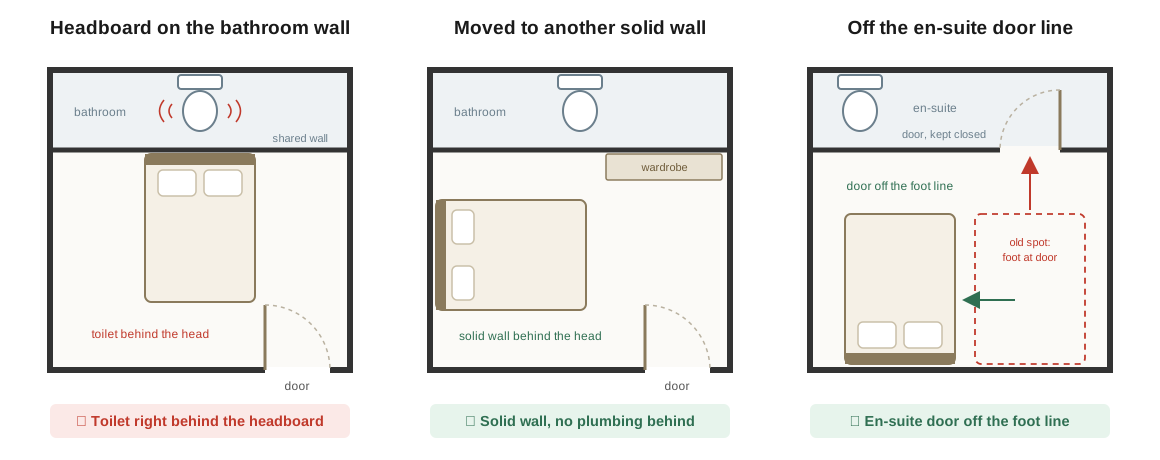
Three versions of the same idea. A solid wall with no bathroom behind it is the cleanest answer; when an en-suite door is in play, keep it off the foot line and closed at night.
Short answer: traditional feng shui dislikes the head of the bed on a wall shared with a bathroom, especially with a toilet right behind the headboard, and it dislikes an en-suite door at the foot of the bed. Move the head to another solid wall if one works. If not, add a solid headboard, a gap or bookcase, a closed bathroom door, and quieter fittings. It is a common, livable layout.
Why a bed against a bathroom wall is a feng shui concern
Feng shui wants a solid, quiet wall behind the head of the bed, the same support idea behind the commanding position. A wall shared with a bathroom is technically solid, but tradition counts what sits on the other side. Bathrooms are where water drains away, so a bathroom directly behind your head is seen as weak backing for rest.
Practitioners usually rank the cases: a toilet directly behind the headboard is avoided most, a shower, bath, or basin is milder, and a bathroom off to the side of the bed matters less again. One practitioner reference we cite below points out that this rule is hard to find in the classical texts and treats noise, humidity, and leaks as the real concerns. Other modern practitioners say a clean, ventilated bathroom is simply part of the home. So views vary, and this is a widely shared preference, not a safety rule.
What actually matters day to day
Behind the tradition are three practical issues you can check yourself. Fix these first:
- Plumbing noise. Pipes run inside or along shared walls. Flushing, a refilling tank, a running faucet, or a neighbor's late shower can be loud at pillow level, especially through thin walls.
- Humidity on the shared wall. A bathroom without good ventilation pushes moist air into the wall and the room. Over time that can show up as a cold, damp patch or mold behind the headboard, where it is hard to see.
- Light and smell from an en-suite. An en-suite door that opens toward the bed lets in light when someone uses it at night, plus the fan noise and smell that come with any bathroom.
If none of these bother you and the wall is dry, the rest is traditional preference. If one does, that is the part to solve, whatever wall you choose.
First choice: another solid wall
Check whether a different wall can take the head of the bed. The ideal setup is the one from our guide to feng shui bed placement: head against a solid wall with no bathroom behind it, the door in view, and the bed not lined up with the doorway.
A wall backing onto a bathroom is often the "obvious" bed wall because it has no window or door. Test the others anyway. An outside wall, or a wall shared with a hallway or a quiet room, usually solves the noise and the tradition at once. If the only alternative puts the bed under a window or straight in line with the door, weigh the two: a quiet, dry bathroom wall can be a better trade than a bed facing the door. Our feng shui bedroom layout guide walks through that comparison wall by wall.
When the bathroom wall is the only option
Plenty of bedrooms leave exactly one wall long enough for the bed, and it backs onto a bathroom. That is a normal constraint. Keep the bed there and soften the spot in this order:
- A solid, upholstered headboard. A padded headboard with no slats gives the head of the bed a firm backing and takes the edge off sound coming through the wall.
- A small gap or a buffer. Pull the bed a few centimeters off the wall so it does not touch the plaster, or put a bookcase, a storage headboard, or a wardrobe on the shared wall if the room allows. Books and clothes add mass between you and the pipes.
- Keep the bathroom door closed at night. This is the easiest habit, and it cuts light, sound, and smell.
- A door sweep or brush strip. If light or smell leaks under the bathroom door, a brush strip helps. If the bathroom fan relies on that gap for air, use a brush rather than a full seal and keep the fan working.
- Quieter fittings. A soft-close toilet seat, fixing a tank that keeps refilling, and asking a plumber or landlord about pipe lagging or a noisy valve all reduce the noise you actually hear.
| Situation | Do this | What it does not change |
|---|---|---|
| Toilet directly behind the headboard | Solid upholstered headboard + small gap or storage buffer | The toilet is still on the other side |
| Flushing or pipe noise at night | Soft-close seat, fix running tank, ask about pipe lagging | The wall is still shared |
| Damp patch or mold on the shared wall | Run the bathroom fan, report it to the landlord or a plumber | It is maintenance, not a feng shui cure |
None of this is a cure. These changes make the spot quieter and drier, and that is what most people notice.
En-suite door facing the bed
An en-suite raises a second question: where its door sits relative to the bed. We use the same rule as for the main door: a bed faces a door when the foot of the bed points straight at it. An en-suite door on the foot line is the arrangement tradition dislikes, and in practice it is also where light and sound reach you most directly.
- Shift the bed off the foot line. Often a small move sideways, or turning the bed to a neighboring wall, puts the en-suite door off to one side. This is the cleanest fix.
- Keep the door closed at night. If the en-suite has a door, close it before bed.
- Add a curtain if there is no door. Many open-plan en-suites have only an opening; a full-height curtain gives back privacy and blocks light.
An en-suite door beside the head of the bed, rather than at the foot, is a milder concern in tradition, but opening it at night still puts light and sound right at your pillow, so closing it before bed covers that case too.
Keep safety and daily use first. Whatever you do, leave a clear path from the bed to the en-suite for nighttime trips, and do not put a screen or bookcase where the door needs to swing.
A quick self-check
Lie where your pillow goes and ask: Is a toilet or shower directly behind my head? Can another solid wall take the head of the bed? Do I hear flushing or pipes at night? Is the shared wall dry? Does an en-suite door sit straight at the foot of the bed? The answers tell you whether to move the bed, add a buffer, fix a fitting, or leave it.
Common mistakes to avoid
- Treating it as an emergency. A bathroom behind the bed is common, especially in apartments.
- Ignoring the damp. A bookcase or headboard can hide a damp wall. If the wall feels cold and wet or shows mold, deal with ventilation or a leak first.
- Sealing the bathroom airtight. Close the door, but keep the exhaust fan working and do not block the air gap it depends on.
- Blocking the route. A buffer or screen should never narrow the path to the bathroom or the bedroom door.
- Expecting a health or luck result. Moving the bed or adding a headboard can make the room quieter and calmer. It is not a treatment for anything.
Sources and scope
This guide reflects common practitioner advice on beds sharing a wall with a bathroom, such as Master Sean Chan's note on a bed against a bathroom wall, balanced by more relaxed modern views like Joey Yap's comments in Her World. For the practical side, the US EPA's brief guide to mold, moisture and your home covers bathroom ventilation and fixing leaks. It is a Form-school idea about what sits behind and in front of the bed, not a compass or birth-date method. We separate tradition, everyday comfort, and safety, and we make no sleep, health, or luck claims.
Test your real wall options
The quickest way to find out whether another wall can take the bed is to look at your actual room. Draw your bedroom in the free planner with the doors, windows, and walls in place, and it will show which walls give the head of the bed solid support and keep both doors off the foot line.
Frequently Asked Questions
Is it bad feng shui to have a bed against a bathroom wall?
Traditional feng shui prefers the head of the bed against a solid wall with nothing busy behind it, so a wall shared with a bathroom is a disliked spot, and a toilet directly behind the headboard is the version people avoid most. It is a widely shared preference, not a safety rule. Many apartments have this layout, and it is livable with a few practical changes.
What if the toilet is directly behind my headboard?
First check whether another solid wall can take the head of the bed. If not, keep the bed there and add a solid, upholstered headboard, leave a small gap or put a bookcase on the shared wall, and deal with the practical side: a quiet toilet seat, no running tank, and a dry, well-ventilated bathroom. These soften the spot; they do not change what is behind the wall.
Is a bed against a shower or sink wall better than a toilet wall?
In most practitioner writing, yes. The toilet is described as the strongest concern, a shower or sink as milder. The practical issues are similar either way: water noise in the pipes and humidity on the shared wall. Treat the toilet wall as the one to move away from first if you have a choice.
Is an en-suite door facing the bed bad feng shui?
On this site, a bed faces a door when the foot of the bed points straight at it, and that applies to an en-suite door too. Feng shui dislikes it, and in daily life the door brings light, sound, and smell toward the bed. Keep the door closed at night, add a curtain if it has no door, or shift the bed so the door sits off the foot line.
Can a bathroom behind the bed affect my health?
We make no health, sleep, or luck claims. What you can actually notice is practical: flushing and pipe noise at night, and damp or mold on a shared wall if the bathroom is poorly ventilated. Those are comfort and maintenance issues. If you see a damp patch or mold, tell your landlord or a plumber.