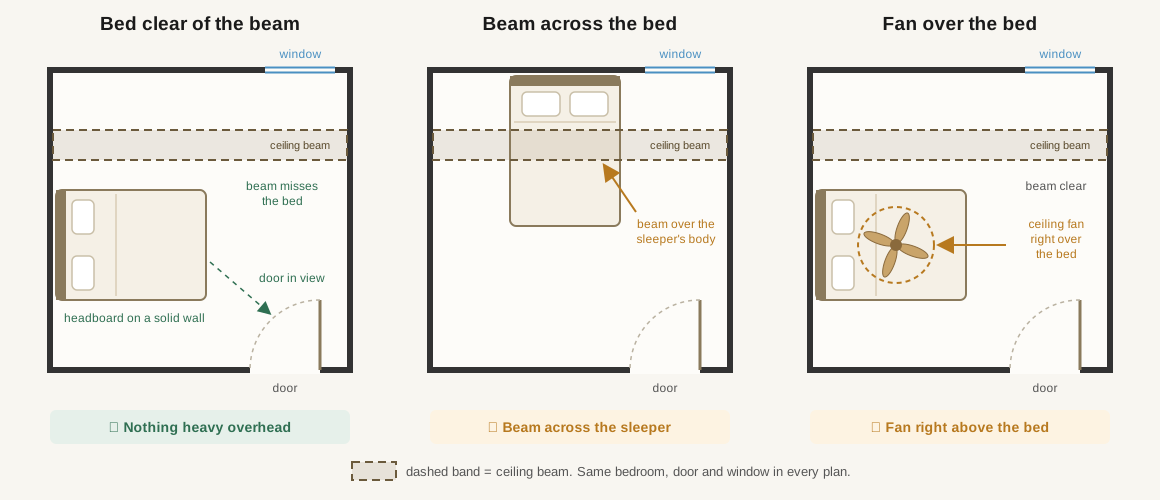
One bedroom, one beam, one door and one window. On the left nothing hangs over the bed. In the middle the beam crosses the sleeper, and on the right a fan takes its place.
Short answer: feng shui tradition prefers a clear ceiling over the bed. If a beam runs across your bed, move the bed out from under it first. If you can't, turn the bed so the beam runs along it, not across your body. The same thinking applies to sloped ceilings, ceiling fans, heavy light fixtures and shelves above the headboard. A sound beam is not a safety problem. Anything that could fall is, so treat that part separately.
Why feng shui cares about a beam over the bed
Feng shui is a Chinese tradition about arranging buildings and rooms. We treat it as a cultural practice, not a science. Our plain introduction to feng shui covers the background.
The overhead rule is one of the most repeated bedroom rules. Law of Feng Shui tells readers to avoid structural beams overhead and to plan the bed position around them. Feng Shui for Modern Living calls a single heavy beam one of the worst offenders in a room. The idea behind it is that a beam over a sleeper presses down on them all night. Some writers go further and link each part of the body to the beam above it. We don't repeat those claims here, and we make no promises about sleep, health or anything else.
It helps to keep three things apart:
- Tradition. A heavy shape over the bed is seen as pressing down on the person under it.
- Comfort. A low, dark beam can make a bedroom feel smaller and heavier. Some people notice it, and others like the look.
- Safety. A sound beam carries the roof or floor above it and has no structural downside for the bed. What matters for safety is head clearance and anything that could fall: a fixture, a fan, a shelf or a heavy frame.
Which beams matter most
Not every beam gets the same attention in feng shui writing.
- A beam running across the bed, over the chest or middle of the body, is the case most sources warn about. The middle plan in the diagram shows it.
- A beam running along the bed, parallel to the sleeper, is usually treated as milder. Tom's Guide passes on advice from feng shui and interiors expert Suzanne Roynon to sleep between beams rather than under them.
- A beam over the foot of the bed rarely comes up. The concern in the sources we read is the sleeper's body, so most people treat it as the least pressing case.
Structural versus decorative is where sources vary. Law of Feng Shui names structural beams specifically. Other writing doesn't make the distinction and treats any visible beam the same way. If yours is a thin decorative trim piece, you can reasonably worry about it less. Plenty of people choose a room for its beams.
How to fix a beam over the bed
Work through these in order and stop when one works.
- Move the bed out from under it. This is the first choice in the sources we read. Try the other walls before anything else, and keep the basics in mind: headboard on a solid wall and the door in view, as our guide to feng shui bed placement explains.
- Turn the bed so the beam runs along it. If the beam has to be over the bed, a beam parallel to the bed is the usual fallback. In a room with several beams, line the bed up between two of them.
- Make the beam look lighter. A beam painted the same color as the ceiling stands out less. A canopy bed or a fabric drape under the beam is the other common option, and Feng Shui for Modern Living suggests a fabric canopy for overhead cupboards too. If you hang fabric, keep it well away from light bulbs, lamps and fixtures.
- Know the traditional cures. Hanging two bamboo flutes on the beam is an old custom, and Feng Shui for Modern Living also mentions a pagoda wind chime. We describe these as customs only. You don't need to buy anything to arrange a bedroom well.
A dropped ceiling or a boxed-in soffit can hide a beam completely. That is building work, so it belongs with a contractor.
Sloped ceiling and attic bedroom feng shui
A sloped ceiling raises the same concern as a beam, spread over a larger area. Roynon describes a bed under a slanted ceiling as creating a sense of downward pressure on the head and body, and suggests putting the bed and headboard in the highest part of the room.
For an attic bedroom or a room with one low wall, that usually means:
- Headboard on the tallest wall, if the room allows it, so the low side is over the foot of the bed or open floor.
- Enough clearance to sit up in bed without ducking. If you hit your head reading in bed, the bed is in the wrong spot, whatever any rule says.
- If the bed has to go under the slope, put the foot of the bed under the low side, not the head.
- Use the low edge for things that don't need headroom: a dresser, a bench, storage boxes.
Painting the slope the same color as the walls makes the line between wall and ceiling less obvious. That is a design choice, and it helps a small attic room look bigger.
Ceiling fan over the bed
Feng shui writing often treats a ceiling fan right over the bed like a beam. Feng Shui for Modern Living says hanging lights and ceiling fans should not be placed directly over the bed. In Livingetc, feng shui expert Karen Rauch Carter lists lights, fans, beams and skylights among the things she prefers not to have above a bed.
The practical points are easier to see:
- Draft. A fan directly overhead blows on you all night. Some people want that in summer. Many don't, especially once the room cools.
- Wobble and noise. A fan that wobbles or clicks over your face is hard to ignore, and a loose fan is a reason to have it checked.
- Mounting. A fan is heavy and moves. If it wobbles, if you are installing one, or if you are not sure what is holding it up, have a qualified electrician check the mounting.
If the fan stays where it is, moving the bed so the fan sits over the floor beside it, as in the left plan of the diagram, solves both the tradition and the draft.
Pendant lights and chandeliers over the bed
A big chandelier or a heavy pendant over the bed follows the same rule. Homes & Gardens notes that feng shui prefers no ceiling light above the bed, and feng shui expert Gary Hawkes told Livingetc to avoid large lights over the bed.
Moving the bed is usually easiest. Moving the fixture means new wiring and a new mounting point in the ceiling, which is electrical work for a qualified electrician. If the room is otherwise fine, bedside lamps or wall lights can take over from a big overhead fixture, and a small, light ceiling fixture is less of a concern than a heavy one.
Shelves, heavy frames and mirrors above the headboard
The wall above the bed counts as overhead too. Roynon names shelves, cupboards, mirrors and heavy artwork hanging above the head of the bed as things to avoid. Our guide to the feng shui headboard covers what tradition does want there: a solid headboard on a solid wall.
Safety guidance agrees here. The Federal Alliance for Safe Homes (FLASH) says not to hang heavy objects over beds, sofas or anywhere you sit, and advises hooks that go through the wall into the studs. Ready.gov's earthquake page advises securing objects that hang on walls and keeping heavy items on low shelves. Those points matter most in earthquake areas, but a shelf of books over your pillow isn't a great idea anywhere.
If you want something above the bed, choose light, flat art on secure hooks. Put books, plants and heavy frames on another wall.
Small bedrooms with no other spot
In a small bedroom the bed may only fit in one place, and that place may be under the beam. Rank what matters:
- Anything that could fall comes first: no shelves, heavy frames or loose fixtures over the bed.
- Head clearance to sit up comfortably.
- The bed placement basics: a solid wall behind the headboard and the door in view.
- The direction of the beam: along the bed is better than across it.
- Visual softening, like paint or a canopy.
Our guide to the feng shui small bedroom works through the other trade-offs when space is tight.
Overhead checklist
- No beam crosses the bed over your body, or the bed is turned so the beam runs along it.
- Under a slope, the headboard is on the tallest wall and you can sit up in bed.
- No ceiling fan sits right above the bed, and the fan you have doesn't wobble.
- No heavy chandelier or pendant hangs over the bed.
- Nothing heavy hangs on the wall above the headboard, and any art is on secure hooks.
- Any fabric drape or canopy stays well away from light fixtures.
- Electrical changes and doubtful mountings go to a qualified electrician.
Check overhead items in the planner
In our free planner you draw your bedroom in 2D, with walls, doors, windows and furniture. You can add a Beam, Pendant light or Ceiling fan as an overhead obstacle. One of the planner's 8 feng shui rules, Beam over the bed, flags it when the item's outline overlaps the bed's footprint in plan view. The planner can then suggest other bed positions, so you can try a layout on screen before you move anything heavy.
It has limits. It does not model sloped ceilings or ceiling height, so check head clearance yourself. It does not read photos or floor plans either: you draw the room. Draw your bedroom in the free planner and see whether the beam is over the bed.
Sources and scope
The advice on sloped ceilings, sleeping between beams and keeping shelves and heavy art off the wall above the bed comes from Suzanne Roynon in Tom's Guide. The point about structural beams comes from Law of Feng Shui's bedroom guide. Heavy beams, bamboo flutes, the fabric canopy, and fans and pendant lights over the bed come from Feng Shui for Modern Living's 16 steps for the bedroom. The comments from Karen Rauch Carter and Gary Hawkes come from Livingetc, and the note on ceiling lights from Homes & Gardens. Safety advice on wall hangings comes from FLASH's guide to securing items that hang on walls and Ready.gov's earthquake page. Background on the tradition comes from Wikipedia's feng shui article. We keep tradition, everyday comfort and safety separate, and make no claims about luck, health, sleep or relationships.
Frequently Asked Questions
Is it bad feng shui to sleep under a beam?
Feng shui tradition prefers a clear ceiling over the bed and treats a heavy beam above a sleeper as pressing down on them. That is a traditional view, not a structural problem: a sound beam is safe to sleep under. The usual advice is to move the bed out from under it, or at least turn the bed so the beam runs along it instead of across your body.
Where should the bed go in a room with a sloped ceiling?
Put the headboard on the tallest wall if the room allows it, so the low part of the ceiling sits over the foot of the bed or open floor. Feng shui writers describe a low slope over the head as a sense of downward pressure. The practical test is simple: you should be able to sit up in bed without hitting your head.
Is a ceiling fan over the bed bad feng shui?
Feng shui writing often treats a ceiling fan right above the bed the same way it treats a beam, and suggests keeping it off the bed's footprint. In everyday terms, a fan overhead puts a steady draft on the sleeper, and a fan that wobbles should be checked. If the mounting is in doubt, have a qualified electrician look at it.
Can I hang shelves or heavy art above my bed?
Tradition says to keep the wall above the headboard light, and earthquake guidance from the Federal Alliance for Safe Homes says not to hang heavy objects over beds. Light, flat art fixed with secure hooks is the usual compromise. Put books, plants and heavy frames on another wall.
Does your planner check for beams and ceiling fans?
Yes, in plan view. You can add a Beam, Pendant light or Ceiling fan as an overhead obstacle, and the Beam over the bed rule flags it when its outline overlaps the bed. The planner can then suggest other bed positions. It does not model sloped ceilings or ceiling height.