
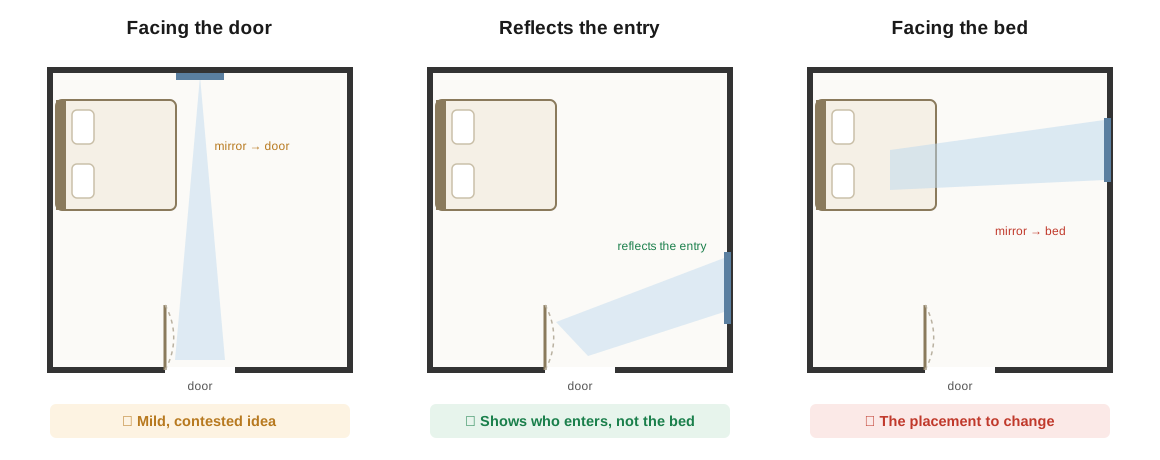
The same bedroom. Only the mirror changes. A mirror facing the door is a mild, contested idea; the placement that actually matters is a mirror facing the bed.
Short answer: a feng shui mirror facing the door is a soft, contested idea rather than a firm rule. Traditions disagree about it, so treat it as optional to adjust. The mirror placement that genuinely earns caution is one that faces the bed.
Mirror facing the door vs mirror facing the bed
If you have read anything about mirrors in the bedroom, you have probably met two different warnings and lumped them together. They are not the same size of problem.
A mirror facing the bed is the one nearly every school agrees to avoid. A mirror that reflects the head of the bed can catch movement, streetlight, or a screen's glow at night, and seeing your own reflection in the dark is unsettling. That is the placement worth changing.
A mirror facing the door is a much gentler matter. It is about the way a room feels as you walk in and out, not about your sleep. When you are deciding whether to worry, sort the mirror into the right bucket first: does it reflect the bed, or only the doorway? If it only reflects the door, you are dealing with the mild version.
Bedroom door or the main entry?
Part of the confusion is that the classic "mirror opposite the door" advice usually describes the front door of the home, where a large mirror directly facing the entrance is said to reflect arriving energy straight back outside. That idea then gets copied indoors to the bedroom door, where it matters even less.
So when you read that a mirror facing the door is bad, check which door is meant. Inside a bedroom, a mirror that happens to face the door is a minor styling choice. It is not the same as a mirror squared up with your home's main entrance, and neither version is a safety issue.
Why the traditions disagree
Here is the honest part: practitioners do not agree on the mirror-and-door question, which is exactly why it stays soft.
- One view says a mirror directly opposite a door pushes incoming energy back out, so the room never settles.
- Another view deliberately places a mirror to reflect the entrance, so that a person in the room can see who is arriving. That is treated as reassuring, a sense of command over the space, rather than a problem.
When two traditions point in opposite directions, that is a strong sign the effect is mild and personal. You are allowed to pick the reading that fits how the room feels to you.
When to move it, when to keep it
Use comfort as the tie-breaker, not fear.
- Move it if a mirror squared up with the doorway feels busy, catches a hallway light, or throws a reflection you notice every time the door opens.
- Keep it if the mirror lets you see the entry from where you sit or stand, and that feels reassuring rather than distracting.
- Prioritise the bed over the door every time. If one mirror faces both, fix the bed reflection first; that almost always resolves the door concern too.
None of this promises better rest, mood, or fortune. It is about a room that feels calm and easy to move through.
Renter-friendly ways to shift a mirror off the door line
You rarely need to remove a mirror — just take it out of the direct line with the doorway:
| Fix | How | What it does not change |
|---|---|---|
| Rehang slightly to one side | Move a framed mirror off the wall spot square with the door | The mirror is still in the room, just not lined up with the door |
| Angle a leaning mirror | Tilt a freestanding or leaning mirror a few degrees | It still reflects — just no longer straight down the doorway |
| Curtain on a rod | For fixed mirrored closet doors, mount a rod and draw a panel across | The mirror stays behind the fabric |
| Removable film | Apply frosted or patterned film to a mirror you cannot move | Full-coverage film dims the mirror's daytime use |
Each is reversible and rental-safe. If you mount or hang anything over a mirror, fix it securely so nothing can fall.
Common mistakes to avoid
- Treating the door mirror like the bed mirror. The bed version is the widely shared caution; the door version is mild and contested.
- Panicking over the front-door rule in a bedroom. The strongest "mirror opposite the door" advice is about a home's main entrance, not an interior bedroom door.
- Using a fix that could fall. Any covering or rehung mirror near a doorway should be attached so it cannot drop.
- Expecting a luck or health result. Shifting a mirror can make a room feel calmer to you; it is not a treatment for sleep, stress, or fortune.
Sources and scope
This guide reflects cross-school practitioner consensus, described in references such as LivingEtc and Homes & Gardens. A mirror reflecting the bed is a well-supported, widely shared preference; a mirror facing the door is a softer, contested point on which traditions openly disagree. We keep tradition, everyday comfort, and safety separate, and we do not promise better sleep, health, or luck from where a mirror goes.
See what your mirror reflects in your own room
The fastest way to settle it is to look at your real layout. Draw your bedroom in the free planner with the bed, door, and mirror in place, then read the fuller feng shui bedroom mirror guide and, if the doorway itself is your worry, what to check before calling a bed "facing the door". Seeing it drawn to scale tells you in seconds whether the mirror lands on the door, the bed, or neither.
Frequently Asked Questions
Is a mirror facing the door bad feng shui?
It is a mild and contested idea, not a firm rule. Some traditions say a mirror directly opposite a door bounces arriving energy back out; others deliberately place a mirror to reflect the entry so you can see who comes in. Because the guidance conflicts and the effect is gentle, treat a mirror facing the door as optional to adjust — very different from a mirror facing the bed, which is the placement most schools actually agree to avoid.
Is a mirror facing the bedroom door the same as one facing the front door?
They are related but not identical. Most classic advice about a mirror opposite a door refers to the main entry of the home. Inside a bedroom, the same idea is applied to the bedroom door, but it carries even less weight there. In both cases it is a traditional preference about the flow of a room, not a safety or health matter.
Should a mirror reflect the door or avoid it?
Either can be fine, because the two traditions disagree. If a mirror opposite the door bothers you, slide it off the direct line with the doorway. If a mirror that reflects the entry helps you see who is arriving, that is a legitimate reason to keep it. The choice is yours; neither version is a serious problem.
What if a mirror faces both the door and the bed?
Then treat it as a bed-facing mirror, because that is the placement that actually earns the caution. Turn it toward a side wall, move it out of the reflection line of the pillows, or cover it at night. Solving the bed reflection usually takes care of the door concern at the same time.
How do I move a mirror off the door line in a rental?
Rehang a framed mirror a little to one side so it no longer sits square with the doorway, stand a leaning mirror at a slight angle, or shift a freestanding mirror along the wall. For fixed mirrored closet doors you cannot move, a curtain on a rod or a removable film takes the mirror out of the direct line. All of these are reversible and rental-safe.