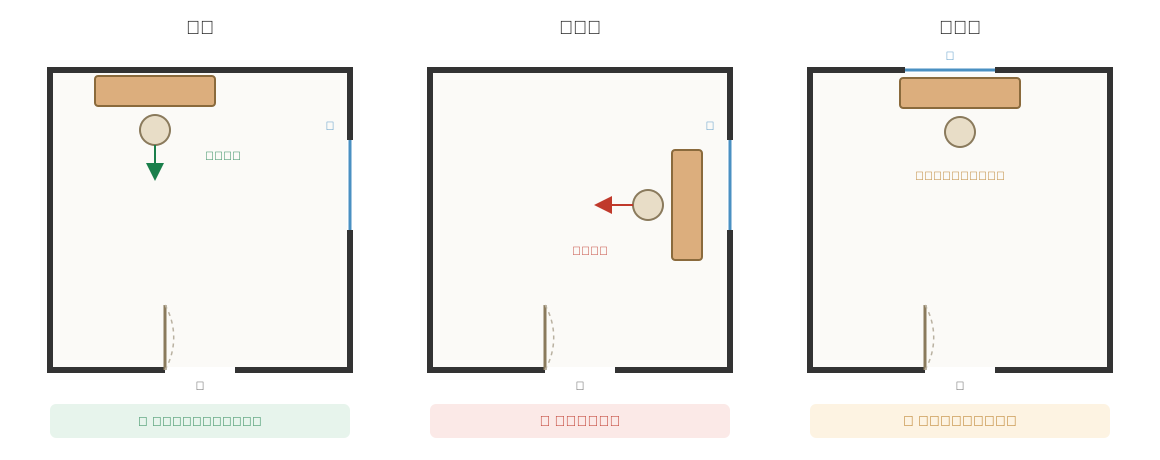
The same room and window. Only the desk moves. The command position keeps your back to a solid wall with the window to the side and the door in view.
Short answer: a feng shui desk next to a window works best when your back is to a solid wall and the window sits to one side, not in front of you and not directly behind you. Aim for that first, then adjust for glare, screens, and cables.
What "feng shui desk next to a window" is really asking
Most people who search for a feng shui desk next to a window are trying to solve two things at once: they want the daylight and the view a window gives, but they have heard that a desk should not sit just anywhere. Both instincts are right. A window brings light and a sense of openness that make a desk a nicer place to work. The question is how to keep that benefit without giving up a supported back and a clear view of the door.
Feng shui answers this with the same idea it uses for a bed: the commanding position. For a desk it means your back is to a solid wall, you face into the room, and you can see the door without turning around. Read the full explanation in our guide to the commanding position in feng shui. A window fits into that picture best when it is beside you, lighting the desk from the side.
The best spot: back to a wall, window to the side
Picture the desk in the corner formed by a solid wall and the window wall. You sit with your back to the solid wall, the room opening in front of you, and the window throwing daylight across the desk from one side. This is the arrangement in the first floor plan above, and it is the one to try before anything else because it keeps three good things at the same time:
- A supported back. A wall behind the chair gives the settled feeling feng shui calls support. Open space behind you does not.
- The door in view. You notice who comes in with a glance, not a full turn.
- Daylight without glare. Light from the side lands on the desk instead of behind your screen or straight into your eyes.
If your room allows it, this side-lit corner is the feng shui desk placement worth building the rest of the layout around.
What to do when the desk must go by the window
Real rooms rarely hand you the perfect corner. Two common compromises come up, and both are workable if you name the trade-off honestly.
Facing the window. Sitting so you look straight out the window is pleasant, but it puts your back to the door and can wash out a screen with glare. If you want the view, keep it, but pull the desk far enough into the room that the door is at least partly in your side vision, and use a shade or sheer panel to soften midday light.
Back to the window. Pushing the desk against the glass so you face the room solves the door-view problem but removes the solid wall behind you and leaves your back against cool, bright glass. Add backing: a low bookshelf, a cabinet, or even a solid, high-backed chair stands in for the missing wall. A blind manages the glare and the temperature swing.
Treat these as improvements, not fixes. A shade or a chair back reduces the interference; it does not turn a window into a solid wall, and it is fair to say so rather than pretend the compromise is invisible.
Desk in a bedroom: the bed comes first
Many desk-by-a-window questions come from small bedrooms doing double duty as an office. When one room holds both, give the bed the commanding position first, because sleep is when you are least aware of your surroundings. Then seat the desk so you are not working with your back to the door. Often the desk lands beside the window, which is exactly the side-lit spot described above.
A note on honesty about our tool: the free planner is built to place and check the bed, not the desk. You can still use it to lock the bed into a good position, then apply the same commanding-position logic to your desk by eye using the guidance here.
Common mistakes to avoid
- Chasing the view at the cost of your back. A window in front of you looks appealing but leaves the door behind you. Keep the wall support and treat the view as a bonus.
- Ignoring glare and cables. Big monitors, cable runs, and afternoon sun are practical-design problems, not superstitions. Solve them, and the feng shui usually falls into place.
- Forcing a floating desk in a tiny room. If the desk cannot sit in open space, it is fine against a wall or window; just add backing and keep the door in view.
- Reading it as a luck rule. A well-placed desk supports focus and comfort. It is not a promise about income, career, or opportunity.
Sources and scope
This guide reflects common feng shui practice for work areas, which applies the commanding position to a desk much as it does to a bed, described in references such as Tom's Guide. It is a Form-school idea about where furniture sits, not a compass or birth-date method. We separate tradition, everyday comfort, and safety, and we do not promise better focus, income, or career outcomes from where a desk goes. Desk-specific placement is not part of our layout engine yet, so treat this as guidance rather than an automated check.
Place your bed first, then your desk
The bed is the anchor of a bedroom layout, and the desk works around it. Draw your bedroom in the free planner to set the bed in the commanding position with your real door and walls, then use the same back-to-a-wall, door-in-view logic for a desk next to your window.
常见问题
Should a feng shui desk face the window or the wall?
Ideally neither straight on. The strongest feng shui desk placement puts your back to a solid wall so you face into the room, with the window to one side. That way you keep a supported back, a view of the door, and daylight without staring into glare or turning your back on the entrance.
Is it bad feng shui to put a desk in front of a window?
It is not forbidden, but it is a trade-off. A desk pushed against the window leaves your back to the glass with no solid support, and it can add glare and temperature swings. If the window wall is the only option, add a low shelf or a solid chair back for support and manage the light with a shade.
Where should a desk go in a bedroom for feng shui?
Give the bed the commanding position first, then place the desk so you are not working with your back to the door. In a small bedroom the desk often ends up beside a window, which is fine as long as you keep a wall or solid backing behind the chair and the door within view.
Why does feng shui say not to sit with your back to the door?
Sitting with the entrance behind you means you cannot see who comes in, which feels unsettling over long work sessions. Feng shui calls the opposite arrangement the commanding position: back to a wall, facing into the room, door in view. It is about comfort and a sense of control, not luck.
Can I put my desk next to the window if I have a big monitor or cables?
Yes. Large screens, cable runs, or a desk that cannot float in the room are real constraints. When they rule out the ideal spot, keep the desk by the window but turn the chair so the door is at least partly in view, and give your back a wall or a solid piece of furniture rather than open space.