Feng Shui Small Bedroom Layout

2026/08/01

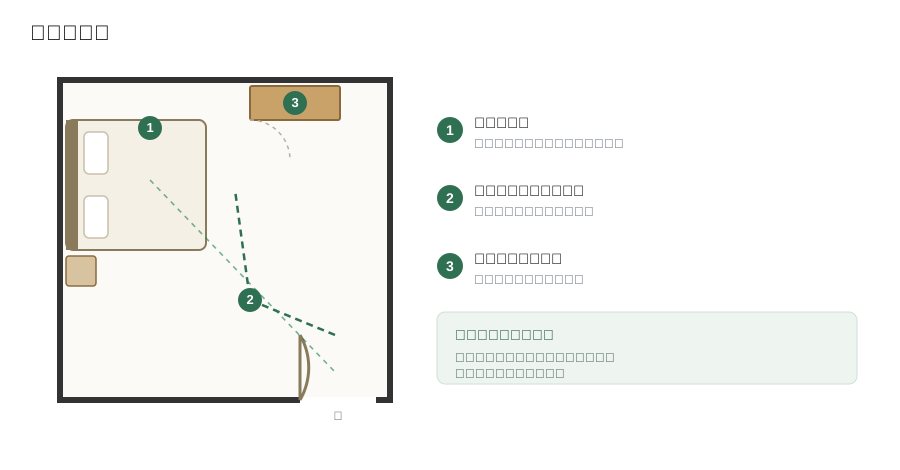
An annotated small bedroom floor plan: the bed keeps the command position, one clear path stays open, the closet door clears the bed, and furniture is scaled to the room

A small bedroom follows the same priorities as any other — the bed in the command position, a clear path, doors that open — with more trade-offs and tighter furniture.

Short answer: in a small bedroom, feng shui still starts with the bed in the command position — head on a solid wall, door in view. Then protect one clear path to the bed, make sure the doors open fully, and scale the furniture to the room. Expect to accept a few trade-offs.

Small rooms need priorities, not more rules

A small bedroom does not follow different feng shui rules; it just forces you to rank them. There is not enough floor to satisfy every preference at once, so the useful skill is knowing what comes first. In practice that means the placement that matters most gets the space, and the nice-to-haves give way. This is the same idea behind our full feng shui bedroom layout guide, applied to a room where every inch counts.

Two things sit at the top of the list in a tight room: the bed in a good position, and the ability to actually move around and use the room. Get those, and a small bedroom works. Miss them, and no amount of decoration will fix the feeling of being crowded.

1. Keep the bed in the command position

Even when space is tight, put the head of the bed against a solid wall where you can see the door from your pillow, without lying in a straight line with it. This is the commanding position, and it stays the first priority in a small room. It is usually still achievable; it just leaves less room for everything else, which is fine.

If the room is very narrow, you may have to push one long side of the bed against a wall. For a single sleeper that is a reasonable trade-off — keep the other side clear to get in and out. For two people, try to keep a path on both sides; if the room genuinely will not allow it, treat the single-side access as a stated compromise rather than an ideal.

2. Protect one clear path

The most common small-bedroom problem is not feng shui at all — it is that you cannot move. Keep at least one clear route from the door to the bed, wide enough that you are not turning sideways or climbing over things. In our layout engine this is a real constraint: a path so tight that you must squeeze past furniture counts as a functional problem, not a minor preference.

A clear path does more for how a small room feels than any symbolic fix. If a piece of furniture blocks the route, it is the piece to rethink first.

3. Make sure doors and drawers open fully

In a small room it is easy to place the bed or a dresser where it stops the room door or a closet door from opening all the way. That is a daily frustration and, in feng shui terms, a blocked flow. Check that:

  • The room door opens fully without hitting the bed.
  • Closet or wardrobe doors clear the bed and each other.
  • Drawers can be pulled all the way out.

If something cannot open, move the furniture, not your expectations. See our guide to feng shui bed placement for how the door swing interacts with the bed.

4. Scale the furniture and store upward

Oversized furniture is the quiet enemy of a small bedroom. A bed frame, wardrobe, or dresser built for a bigger room eats the floor and the walking path. Choose pieces sized for the space, and use vertical storage — taller, narrower units, or shelving above eye level — so the floor stays open. Just keep heavy or open shelving away from directly above the head of the bed.

Tight-room trade-offDo thisSay plainly
No room for both nightstandsUse one, or a wall shelfA single side table is fine
Bed must touch a side wallKeep the other side clear (single sleeper)Two people lose one access side
Not enough floor storageStore upward, off the floorKeep it clear of the bed's head

A quick self-check

Stand in the doorway and ask: Can I walk to the bed without turning sideways? Does the door open all the way? Can the closet open without hitting the bed? Is the head of the bed on a solid wall with the door in view? If yes, your small bedroom is working, trade-offs and all.

Common mistakes to avoid

  • Buying furniture for the room you wish you had. Scale to the actual space; oversized pieces block everything.
  • Sacrificing the path for storage. A clear route matters more than an extra cabinet in a small room.
  • Pushing the bed somewhere the door can't open. Doors and drawers must clear the bed.
  • Chasing every rule at once. Small rooms need priorities; the command position and clear movement come first.

Sources and scope

This guide combines cross-school feng shui placement with practical small-space design on scale, circulation, and storage, drawing on sources such as Law of Feng Shui and Feng Shui Space Planner. The placement ideas are Form-school and geometry-based, not compass or birth-date methods. We separate tradition, everyday comfort, and safety, and make no luck or health claims.

Fit your real small room

A small room is where seeing the layout matters most. Draw your bedroom in the free planner with your real dimensions, door, and closet, and it will check whether the bed fits the command position and whether a clear path and the doors still work.

常见问题

How do you feng shui a small bedroom?

Start with the bed: put the head against a solid wall where you can see the door, even when space is tight. Then keep at least one clear path to the bed, make sure the room and closet doors open fully, and scale the rest of the furniture to the room. Small bedrooms rarely satisfy every rule, so prioritize the command position and clear movement first.

Where should the bed go in a small bedroom?

Against a solid wall with the door in view, in the command position, just as in a larger room. In a very tight space you may have to push one side of the bed against a wall; that is an acceptable trade-off for one person as long as the other side stays reachable and the door and closet still open.

Can the bed touch the wall on one side in a small bedroom?

Yes, for a single sleeper it is a reasonable compromise when the room is small. Keep the other long side clear so you can get in and out and make the bed. For two people, try to keep a path on both sides; if that is impossible, name it as a trade-off rather than pretending it is ideal.

What is the biggest small-bedroom feng shui mistake?

Furniture that is too big for the room. Oversized pieces block the walking path, stop doors and drawers from opening, and crowd the bed. Scaling furniture to the space and storing upward keeps the floor and the path clear, which matters more in a small room than any decorative rule.

Do small bedrooms need different feng shui rules?

The rules are the same; the priorities shift. In a small room you lean harder on physical fit — clear paths, doors that open, furniture that suits the scale — and you accept more trade-offs. The command position still comes first, but you may not be able to satisfy every secondary preference, and that is normal.

Feng Shui Bedroom

Feng Shui Bedroom