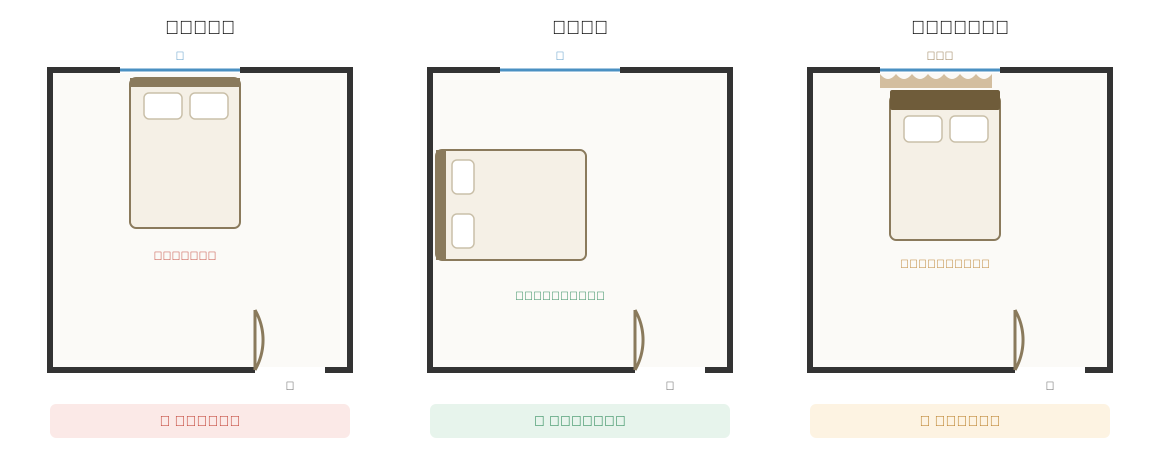
The same room. The best move is a solid wall behind the head with the window to the side. When that is impossible, a tall headboard and heavy curtains support the compromise.
Short answer: in feng shui a bed under a window loses the solid wall meant to support the head. Move the head to a full wall if you can. If the window wall is your only option, keep the bed there but add a tall, solid headboard and heavy curtains you close at night.
Why a bed under a window is a feng shui concern
Feng shui wants the head of the bed against a solid, unbroken wall, because that wall is the support behind you while you sleep. A window directly behind the head breaks that support. Traditionally it is described as energy moving in and out of the opening behind you; in plain terms, the most sensitive spot for rest ends up backed by glass rather than a wall.
There is a practical-design layer under the tradition that is easy to feel. A window behind the head gathers cooler air in winter, outside light in the morning, and street noise at night, all at the level of your pillow. That is why a bed under a window comes up so often — it affects both the feng shui idea of support and the everyday comfort of the spot. It is a widely shared preference, not a safety rule, and it does not come with any promise about your sleep or health.
First choice: move the head to a solid wall
Before anything else, check whether another wall can take the head of the bed. The goal is the commanding position: head against a full wall, the door in view, and the window off to the side where it still lights the room without sitting behind you.
In many bedrooms the window feels like the "natural" wall for the bed simply because it is the longest or the most obvious. It is worth testing the other walls anyway. A head on a solid wall with the window to the side solves the concern outright, and it is almost always better than any remedy applied to a window-backed bed. This is the same first move described in our guide to feng shui bed placement.
When the window wall is the only option
Real rooms often leave you with just one workable wall, and it holds the window. That is a genuine constraint, not a failure. Keep the bed there and support the gap honestly with two changes that work together:
- A tall, solid headboard. Choose a headboard with no slats, no openings, and enough height to sit behind your head when you are propped up. A solid or upholstered headboard stands in for the missing wall and is the single most useful fix.
- Heavy curtains, closed at night. Full-length, heavy drapery or a lined blind gives the window a sense of solidity when drawn, and it cuts the light, draft, and noise that a window adds at the head of the bed.
| Situation | Do this | What it does not change |
|---|---|---|
| Only wall free holds the window | Tall solid headboard + heavy curtains closed at night | The window is still behind the head |
| Cold or drafty window | Lined curtains or a thermal blind | Insulation improves; it is not a wall |
| Bright morning light | Blackout lining behind the drapery | Helps at night; not a support fix |
Treat these as improvements, not a cure. A headboard and curtains give back much of the missing backing and calm the spot, but they do not turn a window into a solid wall, and it is fair to say so.
A quick self-check
Sit where your pillow goes and ask three things: Is a window directly behind my head? Is there another wall that could hold the head with the window to the side? If not, do I have a tall, solid headboard and curtains I can close? Those answers tell you whether you have a real problem, a better wall, or a compromise worth supporting.
Common mistakes to avoid
- Assuming any window near the bed is wrong. The concern is a window directly behind the head, not a window in the room.
- Relying on a thin or slatted headboard. Openwork and metal slats do not provide the solid backing the fix depends on; choose something firm.
- Blocking the window's use entirely. You still want daylight and ventilation by day; the curtains are for night, not for sealing the room.
- Expecting a sleep or health result. Supporting the head of the bed can make the spot feel calmer. It is not a treatment for insomnia or anything medical.
Sources and scope
This guide reflects cross-school practitioner consensus that the head of the bed should have solid support, described in references such as Feng Shui Space Planner and Law of Feng Shui. It is a Form-school idea about where the bed sits relative to the walls and window, not a compass or birth-date method. We separate tradition, everyday comfort, and safety, and we make no sleep, health, or luck claims about a bed under a window.
Test your real wall options
The fastest way to know whether another wall works is to see your actual room. Draw your bedroom in the free planner with the window, door, and walls in place, and it will show whether the head can move to a solid wall before you settle for the window wall.
常见问题
Is it bad feng shui to have a bed under a window?
Feng shui prefers the head of the bed against a solid wall, so a window directly behind the head is considered a weak spot: there is no firm support, and light, draft, and noise gather at the head. It is a common, widely shared preference rather than a safety rule, and it can be softened when the window wall is your only option.
What if the only wall for my bed has a window?
Keep the bed there and support the gap. Add a tall, solid headboard with no slats or openings so your head rests against something firm, and hang heavy curtains you close at night. This does not turn the window into a solid wall, but it gives back much of the missing backing and calms the light and draft.
Does the bed have to move completely away from the window?
Not necessarily. The concern is the window directly behind the head, not a window in the room. If you can place the head on a full wall with the window to the side, that is ideal. If not, a supported bed under the window is a reasonable compromise you can state honestly.
Why does feng shui say a window behind the bed is a problem?
The head of the bed is meant to have a solid wall as support. A window breaks that wall, and feng shui describes energy moving in and out of the opening behind you. There is a practical side too: windows bring cooler air, outside light, and street noise right at the most sensitive spot for rest.
Do heavy curtains actually fix a bed under a window?
They help, but they improve rather than remove the condition. Closing heavy drapery at night restores some sense of a solid backing and cuts light and draft. Paired with a tall, solid headboard it is the standard renter-friendly response, as long as you accept it is a compromise, not a perfect wall.