Feng Shui Bedroom Mirror Placement

2026/08/01

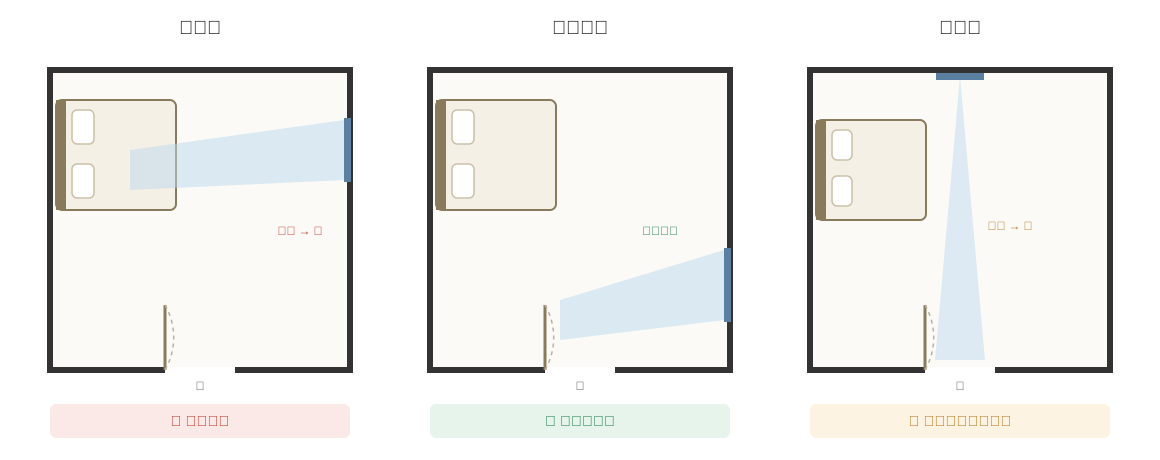
Three bedroom mirror placements: a mirror reflecting the bed, a mirror turned toward a side wall, and a mirror facing the door

The same bedroom. Only the mirror changes. The one placement to avoid is a mirror that reflects the head of the bed; a mirror aimed at a wall or the door is a much softer matter.

Short answer: the main feng shui bedroom mirror rule is that a mirror should not reflect the bed, especially the head of the bed. Turn it, move it, or cover it at night. A mirror aimed at a wall, window, or the door is a far smaller concern.

The one rule that matters: does the mirror reflect the bed?

Advice about mirrors in the bedroom can sound endless, but almost all of it comes back to a single question: does the mirror reflect the bed? A feng shui bedroom mirror that catches the sleeping area is the placement traditions agree on avoiding. Everything else — which wall, what shape, how large — matters much less.

So before you move anything, check what your mirror actually reflects. Stand or sit at the pillows and look at the glass. If you can see the head of the bed in it, that is the arrangement to change. If the mirror shows a wall, a window, or the doorway instead, you likely have nothing to fix. A mirror and a bed can share a room happily as long as they do not face each other.

Mirror facing the bed: the main concern

A mirror facing the bed is the classic bedroom feng shui issue, and it appears in a few forms:

  • A wall mirror opposite the bed that reflects the pillows.
  • A mirror hung behind or above the headboard that bounces back toward the head.
  • A mirrored wardrobe or armoire on a side wall that catches the bed from an angle.

The practical reason is easy to feel: a mirror near the bed can pick up movement, streetlight, or a screen's glow at night, and catching your own reflection in the dark is unsettling. Traditional feng shui frames it as too much active energy for a room meant for rest. Either way, the response is the same and low-effort — turn the mirror toward a side wall, move it out of the reflection line, or cover it while you sleep. This is a comfort and tradition matter, not a claim about your health or your sleep quality.

Mirror facing the door: a separate, softer idea

A mirror facing the bedroom door is a different question, and it carries far less weight. Here the traditions actually disagree. Some say a mirror directly opposite the door reflects arriving energy straight back out of the room. Others deliberately place a mirror to reflect the entrance so that someone in the room can see who is coming in, which is treated as reassuring rather than a problem.

Because the guidance conflicts and the effect is mild, treat a mirror facing the door as optional to adjust. If it bothers you, shift it off the direct line with the doorway. If it helps you see the entry, that is a fair reason to keep it. Do not confuse it with a mirror reflecting the bed, which is the placement that actually earns the caution.

Where mirrors are fine in a bedroom

Plenty of mirror spots raise no concern at all:

  • On a side wall where the glass shows the room, not the bed.
  • Inside a wardrobe or closet door that stays closed most of the time.
  • Angled on a dressing area so it reflects you while standing, not the bed while lying down.
  • Reflecting a window or a piece of art, which is often considered a positive because it brings more light and view into the room.

You do not need a mirror-free bedroom. Only the stricter schools ask for that, and it is a personal choice rather than a shared rule.

Renter-friendly ways to cover or turn a mirror

Sometimes the mirror cannot move — most often when a closet has full mirrored sliding doors. You can still take it out of the reflection line without removing anything:

FixHowWhat it does not change
Curtain on a rodMount a rod above the mirror and slide a sheer or panel closed at nightThe mirror is still there behind the fabric
Removable filmApply frosted, patterned, or graphic film to the glassA full-coverage film dims the mirror's daytime use
Peel-and-stick wallpaperCover the glass with removable wallpaper you can styleFully opaque covering ends the mirror function
Cover at nightDrape a light scarf or throw over a freestanding mirror before bedOnly works while it is covered

Each of these is reversible and rental-safe. They reduce the reflection at the bed; they do not claim to do anything more.

Common mistakes to avoid

  • Assuming any mirror in the bedroom is wrong. The concern is a mirror reflecting the bed, not the presence of a mirror.
  • Treating the door mirror as seriously as the bed mirror. They are different ideas, and the door version is mild and contested.
  • Using a fix that could fall. If you cover or mount anything over a mirror, attach it securely so nothing can drop near the bed.
  • Expecting a health or luck result. Adjusting a mirror can make a room feel calmer to you. It is not a treatment for sleep, stress, or fortune.

Sources and scope

This guide reflects cross-school practitioner consensus, described in references such as LivingEtc and Homes & Gardens. A mirror reflecting the bed is a well-supported, widely shared preference; a mirror facing the door is a softer, contested point. We separate tradition, everyday comfort, and safety, and we do not promise better sleep, health, or luck from where a mirror goes.

See what your mirror reflects in your own room

The quickest way to know is to look at your real layout. Draw your bedroom in the free planner with the bed, door, and mirror in place, alongside our guide to feng shui bed placement, and you can see at a glance whether the mirror lands on the bed before you move anything.

常见问题

Where should a mirror go in a feng shui bedroom?

Put a bedroom mirror where it reflects a wall, a window, or the doorway rather than the bed. A mirror on a side wall, inside a closet door that stays closed, or angled away from the pillows all work. The one placement feng shui consistently avoids is a mirror that reflects the head of the bed.

Is a mirror facing the bed really bad feng shui?

It is the most widely shared bedroom mirror concern, but it is a traditional preference and a comfort issue, not a safety rule. A mirror facing the bed can catch movement and light at night and feel unsettling. Turning or moving it, or covering it at night, resolves the concern without any drama.

What about a mirror facing the bedroom door?

A mirror facing the door is a separate and softer idea. Some traditions say a mirror opposite the door pushes energy back out, while others place a mirror to reflect the entrance so you can see who comes in. It is not the same as a mirror reflecting the bed, and it carries far less weight.

How do I cover a mirror I cannot remove, like mirrored closet doors?

Hang a curtain on a rod above the mirror and slide it closed at night, apply a removable frosted or patterned film, or use peel-and-stick wallpaper over the glass. All three are renter-friendly and reversible. They reduce the reflection; they do not need to be permanent.

Do I have to remove every mirror from the bedroom?

No. Most guidance accepts mirrors in a bedroom as long as they do not reflect the bed. A full-length mirror for dressing, a mirror inside a wardrobe door, or one on a side wall are all fine. Only the stricter schools ask for a completely mirror-free bedroom, and that is optional.

Feng Shui Bedroom

Feng Shui Bedroom